

Arizona’s economic development story has moved well beyond rapid population growth and low-cost Western expansion. The state is now assembling one of North America’s most consequential advanced-industry platforms, led by semiconductors but increasingly reinforced by aerospace, defense, artificial intelligence, health care, logistics and energy infrastructure. In 2025, the Arizona Commerce Authority and its partners won 90 competitive projects representing 27,749 projected jobs and more than $34 billion in investment. Those results established a broad base for another active year of facility openings, supplier commitments and construction milestones.
Semiconductor Investment Reaches Historic Scale
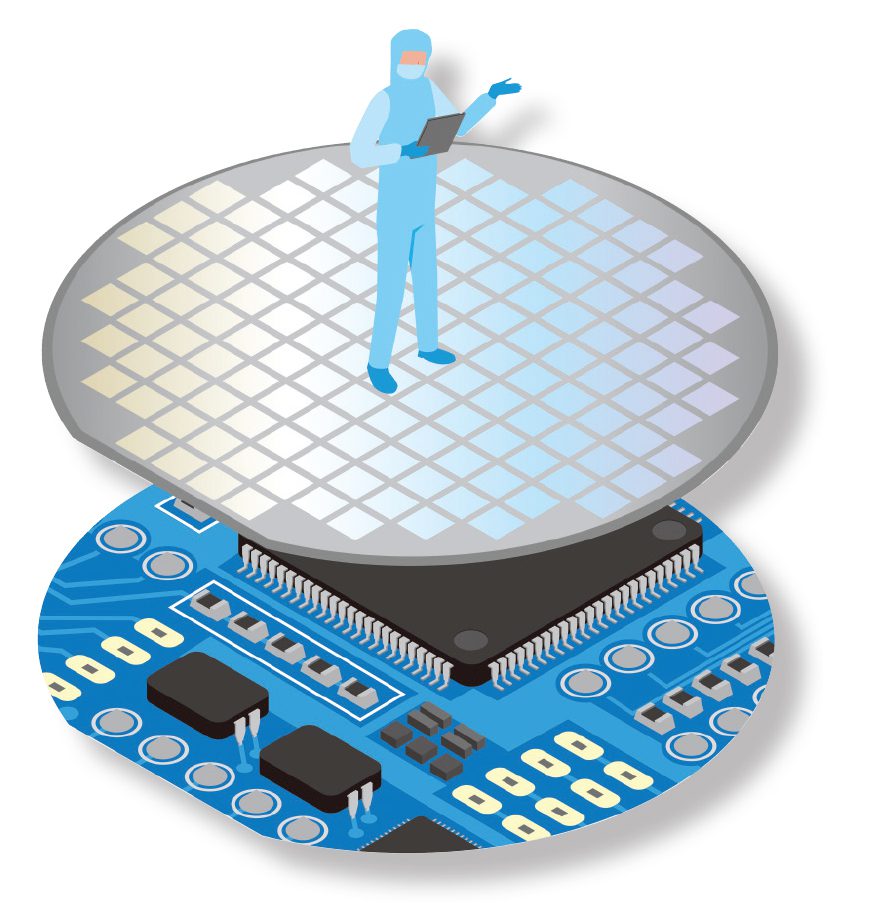
No project defines the state’s trajectory more clearly than Taiwan Semiconductor Manufacturing Company’s Phoenix campus. TSMC’s March 2025 announcement added $100 billion in planned U.S. investment, including three additional fabrication plants, two advanced-packaging facilities and a major research and development center. Combined with earlier commitments, the plan brought the company’s announced Arizona investment to $165 billion and its projected employment to approximately 6,000 jobs. The scale is transforming the surrounding supplier market as materials, equipment and service companies locate closer to the fabs. Arizona reported in early 2026 that more than 70 semiconductor expansions announced since 2020 represented over $214 billion in investment and roughly 28,000 jobs.
Supplier activity is giving that headline investment greater depth. KoMiCo opened a $60 million semiconductor equipment cleaning and coating facility in Mesa in January 2026, with plans for more than 200 jobs. KPPC Advanced Chemicals broke ground on a $120 million ultrapure-chemical campus in Casa Grande, also expected to create 200 jobs. Applied Materials disclosed plans for a new Chandler advanced-manufacturing facility involving more than $200 million and up to 200 positions. ASML, meanwhile, opened a Phoenix technical training center capable of training more than 1,000 engineers annually. Together, these projects show Arizona progressing from a fab location into a fuller production, research, training and maintenance ecosystem.
Advanced Manufacturing Broadens the Economy
Advanced manufacturing is expanding outside the chip sector as well. Hadrian opened its $200 million Factory 3 operation in Mesa, a 290,000-square-foot AI-powered manufacturing and software hub expected to create more than 350 jobs supporting aerospace and defense customers. ERMCO announced a 566,000-square-foot transformer manufacturing facility in western Maricopa County that is anticipated to create more than 500 engineering, skilled-trades and operations positions. DSV also broke ground on a 950,000-square-foot regional headquarters and logistics hub in Mesa, a $14.5 million project designed to consolidate air, sea, road and contract-logistics services.
Health Care, Technology and Headquarters Growth
Major institutional investment is adding another dimension. Mayo Clinic announced nearly $1.9 billion for an expansion of its Phoenix campus, its largest Arizona investment, with more than 3,000 anticipated jobs. Axon advanced plans to expand its Scottsdale headquarters and manufacturing campus, while industrial AI company Cognite opened its global headquarters in Tempe. These projects strengthen the state’s ability to retain technical talent across multiple sectors rather than depending on a single manufacturing cycle.
Incentives Support a Larger Industrial Ecosystem
Arizona’s incentive strategy combines performance-based deal support with long-term ecosystem investment. The Arizona Commerce Authority administers tools such as the Qualified Facility Tax Credit, the Quality Jobs Tax Credit and research-and-development incentives, while communities use infrastructure, permitting and workforce partnerships to improve speed to market. State support for university research is also becoming more targeted. An Arizona Commerce Authority investment in the University of Arizona’s semiconductor nanofabrication capabilities included $4.5 million for workforce development, connecting laboratory capacity with high-paying production careers.

Infrastructure Will Shape the Next Phase
That approach is particularly important as Arizona manages the pressures created by its own success. Water availability, electric generation, transmission capacity, housing and transportation will influence the pace and location of future projects. Semiconductor fabs, data-intensive operations and fast-growing communities all require infrastructure decisions that extend far beyond a traditional recruitment package. The state’s advantage will depend on converting large announcements into reliable utilities, skilled workers and supplier opportunities across the full construction and production timeline.
International Investment Builds Momentum
Arizona enters the next phase with unusual scale and international visibility. In 2025 alone, the state attracted 55 foreign direct investment projects totaling $107.7 billion and more than 25,000 projected jobs, according to the Arizona Commerce Authority. Japan, Canada and Taiwan were leading sources of projects. If Arizona continues pairing landmark investments with workforce, research and infrastructure capacity, it will not simply participate in the reshoring of strategic industries; it will help define how the nation’s advanced-manufacturing economy is organized.
Extending Growth Across Arizona
Regional reach will be another measure of success. Most landmark projects remain concentrated in greater Phoenix, but supplier opportunities, construction demand and logistics flows can benefit communities from Pinal County to Tucson and northern Arizona. Continued investment in certified sites, rural broadband and technical education can distribute gains more widely. Arizona’s universities and community colleges are already adapting curricula for semiconductor technicians, engineers and skilled trades, an important step toward ensuring that residents can enter the new economy at multiple credential levels.