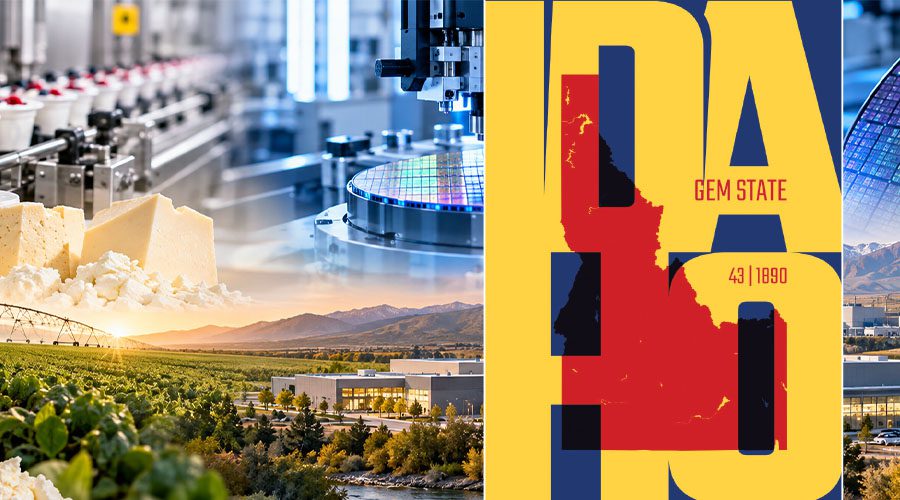
Semiconductor investment, established agricultural strengths and industry partnerships are shaping the state’s next chapter of business growth.
Idaho’s economic development story brings together industries that operate on very different scales but share a common need for skilled workers, dependable infrastructure and room to grow.
Semiconductor manufacturing and research are expanding the state’s role in advanced technology, while food processing continues to build on its agricultural foundation. Energy research adds another dimension.
For businesses evaluating expansion locations, this combination offers opportunities to connect with established employers, specialized expertise and supply chains serving markets well beyond Idaho’s borders.
Semiconductor Manufacturing Advances
Micron Technology’s expansion in Boise is central to Idaho’s growing national significance in semiconductor production.
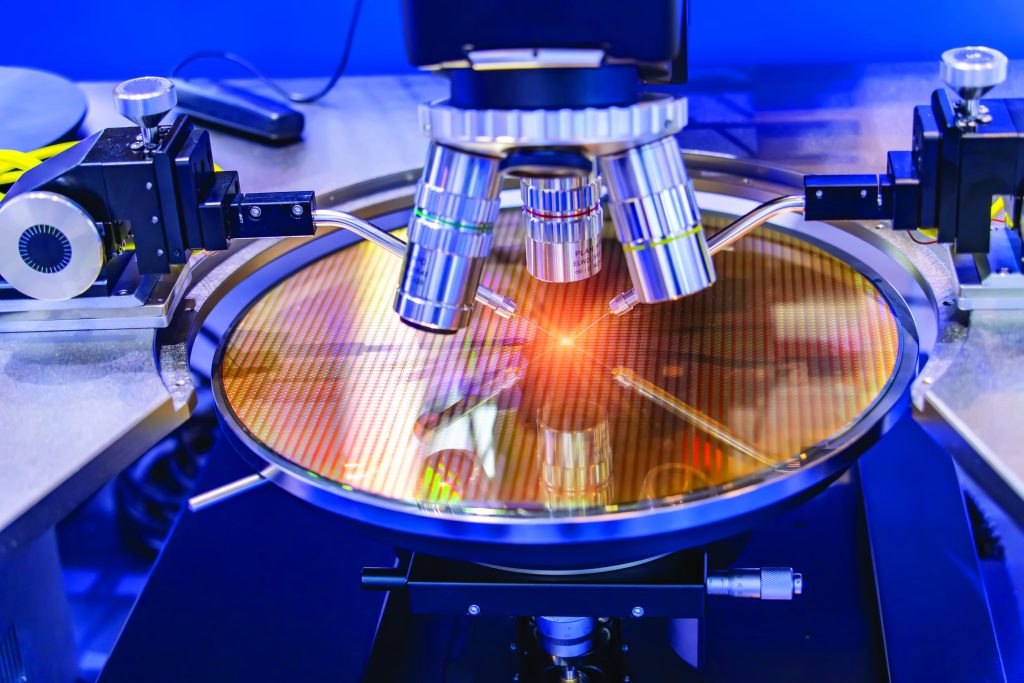
The company plans two leading-edge, high-volume memory fabrication facilities alongside its existing research and development operations. Bringing manufacturing and research together is intended to accelerate product development and support technologies such as high-bandwidth memory, an essential component of artificial intelligence systems.
Micron reports that the Idaho plans are expected to create more than 17,000 jobs across the broader project impact. Its first new Idaho fabrication facility has reached key construction milestones, with DRAM output scheduled to begin in 2027.
For Idaho, the significance extends beyond the factories themselves. Large semiconductor operations require equipment suppliers, technical services, construction expertise and sophisticated manufacturing support.
Their development creates potential opportunities for businesses evaluating how to participate in a growing domestic semiconductor supply chain.
Research investment is reinforcing that manufacturing momentum. In August 2026, Micron announced Micron Research Labs, a long-term research institution headquartered in Boise and backed by a planned $10 billion investment over the next decade.
The initiative will focus on memory technologies, computing architectures, advanced packaging and future semiconductor manufacturing.
The planned investment encompasses a flagship Boise campus, university collaborations, global satellite laboratories and industry partnerships. It strengthens Boise’s role as a center for developing the technologies that will support future computing demand.
Training Connects Workers to Opportunity
Building advanced manufacturing capacity also requires preparing people to operate it. Micron’s new 60,000-square-foot Boise training center provides a concrete example of employers and education partners addressing that need together.
The center supports intensive onboarding, hands-on instruction and apprenticeship pathways. It houses semiconductor process equipment that replicates a fabrication environment, allowing trainees to develop skills on tools similar to those used in production.
Through its partnership with the College of Western Idaho, the facility also supports advanced mechatronics and semiconductor manufacturing programs.
Micron and the U.S. Department of Commerce provided $3 million to the college for educator pay, equipment and classroom space.
For expanding companies, the partnership illustrates the value of connecting technical education directly with workplace requirements. It also creates pathways for students and people changing careers to enter specialized manufacturing occupations.
Food Processing Builds on Established Strengths
Food processing remains an important counterpart to Idaho’s technology economy. Southern Idaho’s agricultural base includes dairy, potatoes, grains and other products that support a diverse manufacturing sector.
This connection between agricultural production and processing provides a foundation for businesses seeking access to ingredients and industry experience.
Chobani’s announced $500 million expansion in Twin Falls demonstrates continued investment in that foundation. The company confirmed the Idaho project in 2025 as it expanded its U.S. dairy processing capacity.

The investment highlights the role established Idaho operations can play in the growth strategies of national food brands.
For prospective investors, food manufacturing also creates potential demand for packaging, refrigeration, automation, transportation and equipment services.
Evaluating those supplier opportunities alongside production projects gives a fuller picture of the sector’s economic reach.
Energy Research Broadens the Business Base
Eastern Idaho contributes another specialized asset through Idaho National Laboratory. As the nation’s nuclear energy laboratory, INL provides infrastructure, technical expertise and research capabilities supporting the development of advanced nuclear technologies.
Its National Reactor Innovation Center works with industry and national laboratories to bridge the gap between concepts, demonstration and commercialization.
INL’s technology deployment activities also help move laboratory discoveries toward industry applications. These resources provide potential partners for companies pursuing energy innovation and other technically demanding projects.
Connections Support Long-Term Growth
Idaho’s transportation network supports these industries through interstate highways, rail connections to West Coast seaports and air service linking businesses with major U.S. markets.
Those connections matter for companies moving ingredients, finished products, manufacturing equipment and people.
Idaho Commerce assists companies with site selection data, incentive evaluation and connections to local partners.
For site selectors, the state’s opportunity lies in matching these resources to a project’s specific requirements.
Idaho’s next phase of growth will depend on turning major investments and established industry strengths into operating capacity, supplier relationships and lasting employment opportunities.