
Returning Home
It does not take a veteran of the corporate location business to sense the history in the geography of America’s next aviation revolution.
Technologies poised to redefine flight—including supersonic travel, electric propulsion, eVTOL air taxis and blended-wing designs—are advancing in North Carolina and Dayton, Ohio, the two places most closely associated with the birth of powered flight. The Wright brothers developed much of their aviation technology in Dayton before achieving the first successful powered flight at Kitty Hawk, North Carolina, in 1903.
More than a century later, the future of aviation is being developed, quite literally, where American flight began. Companies are again pairing these historic aviation ecosystems with modern research, advanced manufacturing, specialized suppliers and public-sector testing infrastructure.
Here are some of the companies and organizations advancing new aviation technologies in the Tar Heel State and Greater Dayton.

North Carolina Aviation Leaders
JetZero
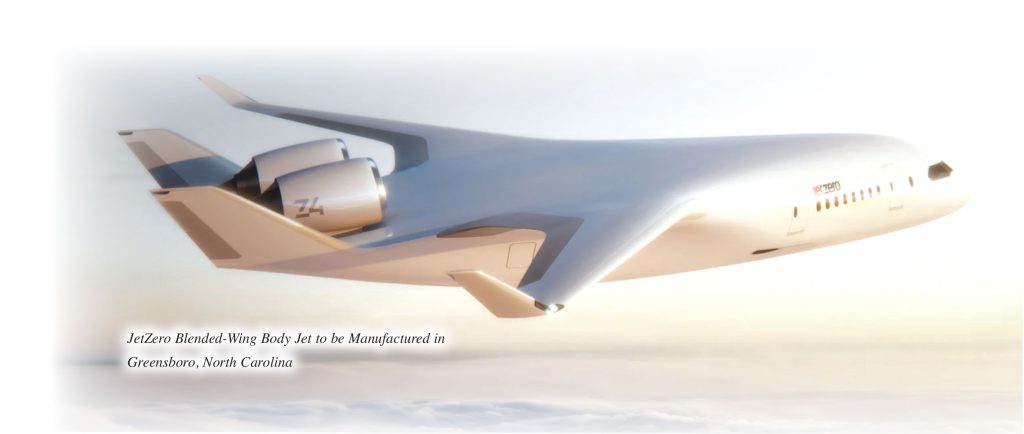
JetZero is developing the Z4, a 250-passenger blended-wing—or “all-wing”—aircraft designed to use up to 50 percent less fuel than conventional jets.
In June 2026, the company named HITT as general contractor and broke ground on an eight-million-square-foot Greensboro headquarters, manufacturing and final-assembly campus expected to employ about 14,000 workers and serve commercial aviation and military transport and refueling markets.
Boom Supersonic
Boom’s completed Overture Superfactory at Piedmont Triad International Airport is intended to assemble the Overture supersonic airliner and revive commercial supersonic passenger service.
The initial line is planned for up to 33 aircraft annually, with potential expansion to 66.
Honda Aircraft Company
Honda Aircraft’s global headquarters, research, production and customer-support operations are based at Piedmont Triad International Airport.
The company manufactures the HondaJet family, known for over-the-wing engine mounts, a composite fuselage and efficient aerodynamics, and is advancing a larger aircraft based on the HondaJet 2600 concept.
Honeywell International
Honeywell’s Charlotte headquarters gives North Carolina another major connection to next-generation aviation.
The company is developing avionics, flight controls, electric motors, thermal-management systems, sensors and sustainable-aviation-fuel technology for electric, hybrid-electric and autonomous aircraft
A $10 million partnership with UNC Charlotte will establish an engineering and technology Innovation Hub.
GE Aerospace
GE Aerospace assembles advanced commercial jet engines at its Durham facility, including the GE9X, GEnx and CFM LEAP families.
The plant links North Carolina to advanced materials, digital manufacturing and higher-efficiency propulsion systems shaping future aviation.

BETA Technologies
Vermont-based BETA is working with the North Carolina Department of Transportation’s eLIFT-NC initiative to test electric aircraft and demonstrate hospital transportation, rural connectivity, emergency response, charging systems and vertiport operations.
HAECO Americas
In Greensboro, HAECO is testing autonomous drones for aircraft inspections, including detection of surface defects, paint problems and lightning-strike damage—an example of robotics and artificial intelligence changing aviation services.
Pratt & Whitney
Longtime Boyd Co. client Pratt & Whitney, an RTX company, operates a highly automated, 1.2-million-square-foot Asheville facility producing critical turbine airfoil components.
The company is investing nearly $1 billion to expand output for its geared-turbofan family, including the GTF Advantage engine for Airbus A320neo-family aircraft.
The plant manufactures technologically demanding components that help make future aircraft more efficient, quieter and more durable.
North Carolina Global TransPark
The Global TransPark has evolved into a growing aerospace and defense hub in Eastern North Carolina.
In April 2026, the U.S. Navy signed a pioneering partnership with the 2,500-acre Kinston aviation and industrial park for aircraft maintenance, repair and overhaul work on C/KC-130 transports and HH-60W search-and-rescue helicopters.
The park also serves as an Airbus Center of Excellence producing advanced composite structures for the A350.
Greater Dayton Aviation Leaders
Joby Aviation
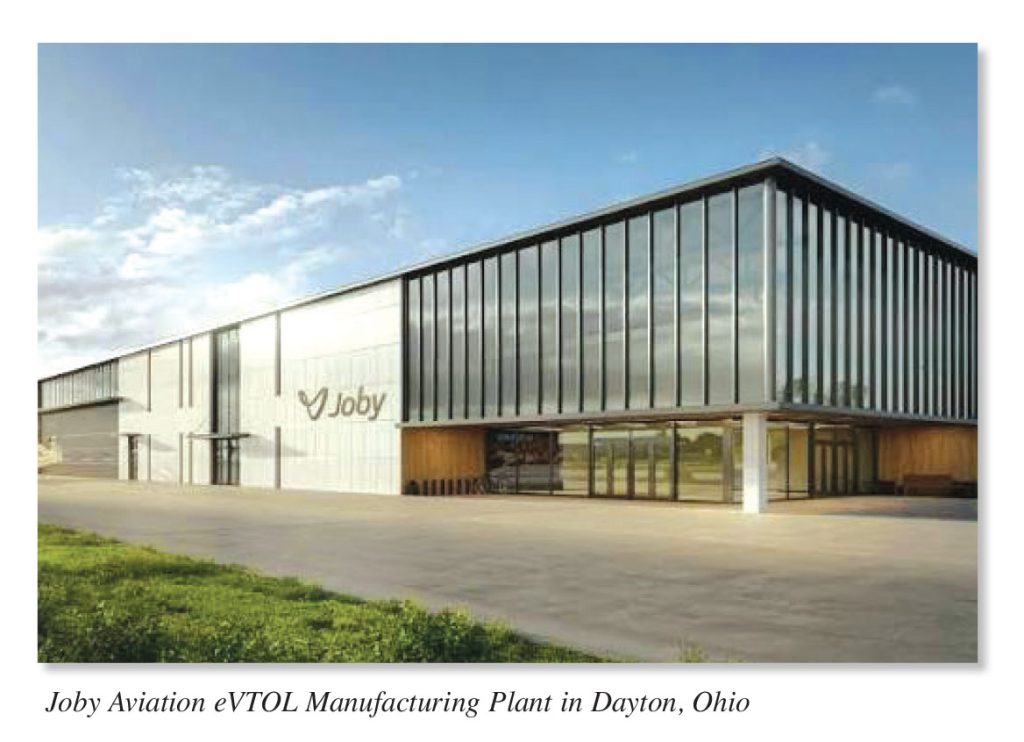
Joby is developing a quiet, all-electric, five-seat eVTOL aircraft for air-taxi and government applications.
It has begun producing composite propeller blades in Dayton and acquired an additional 700,000-square-foot regional facility to support large-scale aircraft and component production.
Electra
Electra announced in July 2026 that it will establish its first major production campus at AirPark Ohio near Springfield-Beckley Municipal Airport.
Its nine-passenger EL9 Ultra Short uses hybrid-electric propulsion and blown-lift technology to take off and land in about 150 feet.
The planned $850 million project could eventually produce 800 aircraft annually.
GE Aerospace
GE Aerospace operates the Electrical Power Integrated Systems Center, or EPISCenter, at the University of Dayton.
The center works on aircraft electrification, power generation and distribution, controls and hybrid-electric propulsion.
CFM International
Located 35 miles south of Dayton, this joint venture between GE Aerospace and longtime Boyd Co. client Safran produces the LEAP engine family and supports LEAP and CFM56 fleets worldwide.
CFM recently signed a memorandum with IndiGo for more than 1,000 LEAP-1A engines, its largest single LEAP order.
AFWERX and the Air Force Research Laboratory
Headquartered at Wright-Patterson Air Force Base, AFWERX and AFRL are central to Dayton’s aviation ecosystem.
Through programs such as Agility Prime, they evaluate eVTOL aircraft, autonomous flight, hybrid-electric propulsion and military applications including logistics, medical evacuation and disaster response.
National Advanced Air Mobility Center of Excellence
At Springfield-Beckley Municipal Airport, the center provides airspace, testing infrastructure and government-industry coordination for electric and autonomous aircraft, helping make the Dayton–Springfield corridor a national proving ground for advanced air mobility.
Another Notable U.S. Aviation Hub
Greater Philadelphia: Aviation Heritage Meets Drone Security
North Carolina and Greater Dayton are not the only historic aviation regions shaping the industry’s next era.
Greater Philadelphia’s roots extend to 1793, when Jean-Pierre Blanchard launched the first manned balloon flight in the U.S. from Philadelphia before an audience that included President George Washington.
The region later became a center for military aviation, helicopters, aircraft manufacturing and commercial air transportation. Today, it is building on that heritage through vertical lift, tiltrotors, autonomous drones, robotics, artificial intelligence and national-security systems.
Boeing’s Vertical Lift Complex
The region’s most visible aerospace anchor is another longtime Boyd Co. client, Boeing, and its 350-acre Vertical Lift complex in Ridley Park, which employs more than 4,000 people.
The campus is home to the H-47 Chinook line, V-22 Osprey fuselage upgrades and mission integration and delivery of the MH-139A Grey Wolf helicopter.
It also houses sustainment, training and the Philadelphia Design Center. The complex also supports Boeing Global Services sustainment and training operations and advanced engineering work for programs across the company.
Leonardo Helicopters
In Northeast Philadelphia, Leonardo Helicopters operates its North American helicopter headquarters, employing more than 1,000 people and delivering Philadelphia-made aircraft worldwide.
The facility is also the primary site for final assembly, development and testing of the AW609, the world’s first civilian tiltrotor.
Montgomery County and Asylon
Suburban Philadelphia’s Montgomery County has an aviation and aerospace pedigree spanning rotary-wing flight, military aviation, satellite systems, electronic warfare, advanced materials and autonomous security drones.
A leading example of how Greater Philadelphia is redefining aviation is Norristown-based Asylon.
Asylon expands the definition of an aviation company. Rather than building passenger aircraft, it uses autonomous drones and robotic systems as intelligent security platforms. These systems inspect infrastructure, document conditions, detect anomalies and help security teams cover more territory.
At Mercedes-Benz Stadium’s Home Depot Backyard in Atlanta and Citizens Bank Park in Philadelphia, an Asylon robotic system patrols public plazas and walkways that are difficult to cover consistently with conventional personnel.
Space Systems, Electronics and Advanced Materials
Also in Montgomery County, Lockheed Martin’s King of Prussia space technology center employs more than 2,500 people serving commercial, military and intelligence customers.
CAES by Honeywell in Lansdale produces microwave and microelectronic components for missile defense, radar and electronic warfare.
Greene Tweed, also in Lansdale, supplies seals, composites and engineered materials found on roughly 90 percent of commercial aircraft and is developing components for eVTOL aircraft, unmanned systems and next-generation engines.
Willow Grove’s Aviation Heritage
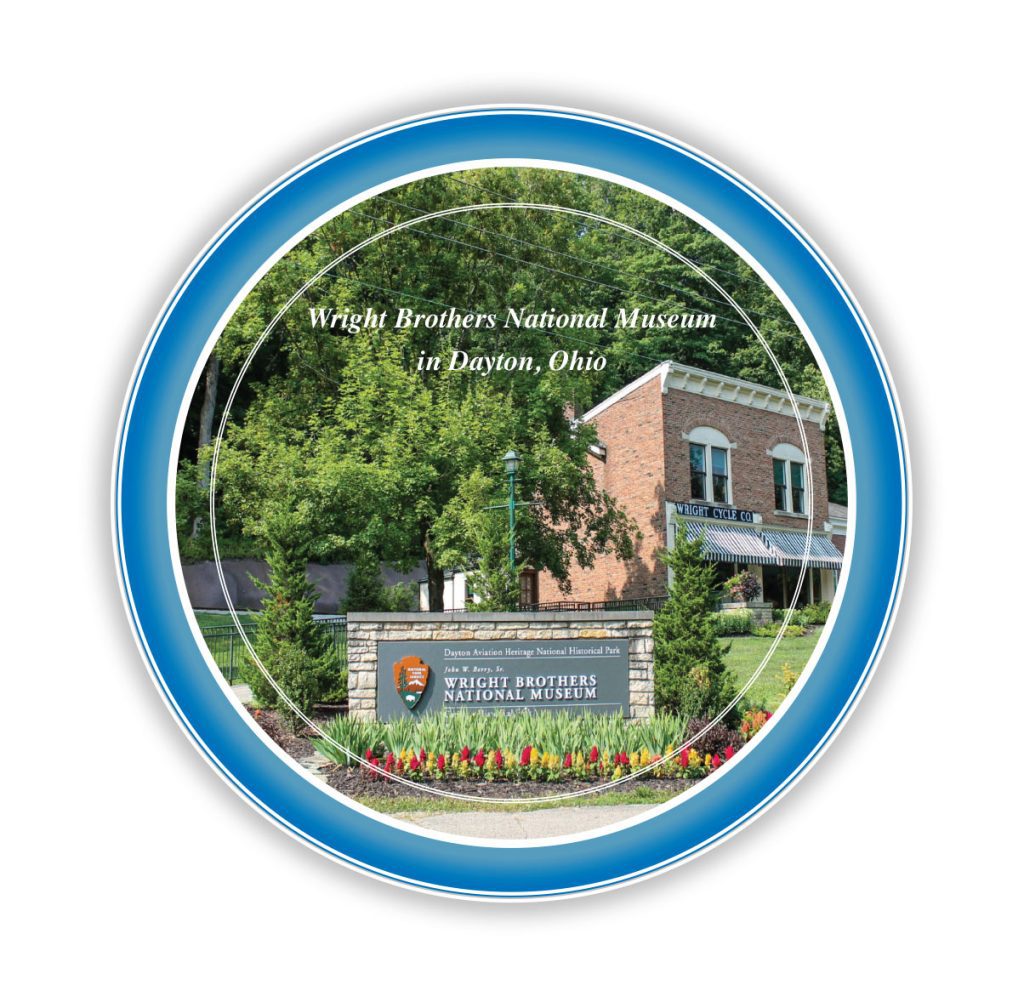
Historically, Willow Grove in Montgomery County can claim a central role in rotary-wing aviation.
At Pitcairn Field in Horsham during the 1920s, Harold Pitcairn established an aircraft operation where the first successful U.S. flight of a rotary-wing aircraft—the Cierva C.8W Autogiro—took place.
Pitcairn also developed the Mailwing, an important early airmail airplane.
Pitcairn Field later became Naval Air Station Joint Reserve Base Willow Grove, connecting nearly the full arc of American aviation—from early commercial aircraft development and World War II antisubmarine operations to Cold War readiness and modern joint-force aviation—before closing in 2011.
New Technologies in Familiar Places
What makes today’s aviation chapter compelling is not simply the technology, but the geography behind it.
In North Carolina, Dayton and Greater Philadelphia, the future of flight is emerging from places that helped write its history. Aircraft may now be quieter, faster, more autonomous and more efficient, but the underlying ingredients remain familiar: engineering talent, specialized manufacturing, military research, precision suppliers and a willingness to test what comes next.
From the Wright brothers and Harold Pitcairn to blended-wing transports, electric air taxis, civilian tiltrotors and autonomous security drones, America’s aviation story is returning to its historic centers with new technologies, new missions and a broader definition of flight.
More Geographies
The surge in U.S. defense spending is helping fuel a new golden age for aviation and aerospace. Beyond traditional military aircraft, investment is accelerating next-generation technologies.
While North Carolina, Greater Dayton, Philadelphia and Montgomery County have all shaped the industry’s history and are charting its future, the next chapter is also being written across a wider geographic and technological landscape that reflects the growing overlap among commercial aviation, national defense, space systems, artificial intelligence and specialized manufacturing.
From the likes of Phoenix, Huntsville, Wichita, Colorado Springs, Southern California, Florida’s Space Coast, Panhandle and South Florida regions, Fort Worth and Seattle to smaller markets such as Moses Lake, Washington; Independence, Kansas; Tullahoma, Tennessee; Midland, Texas; Camden, Arkansas; Savannah, Georgia; and Starbase, Texas, communities of every size are attracting major investments in advanced aircraft manufacturing, autonomous aviation, electric propulsion, sustainable aviation fuel, defense technologies, supersonic travel and aerospace research.
About the Author
John H. Boyd is founder and principal of The Boyd Co. Inc. Founded in 1975 in Princeton, New Jersey, and now based in Boca Raton, Florida, the firm provides independent site selection counsel to leading U.S. and overseas corporations.
Organizations served include numerous Fortune 500 companies, the Aerospace Industries Association, the Council of Supply Chain Management Professionals, MIT’s Work of the Future Project, Canada’s Privy Council, The World Bank and the President’s National Economic Council.