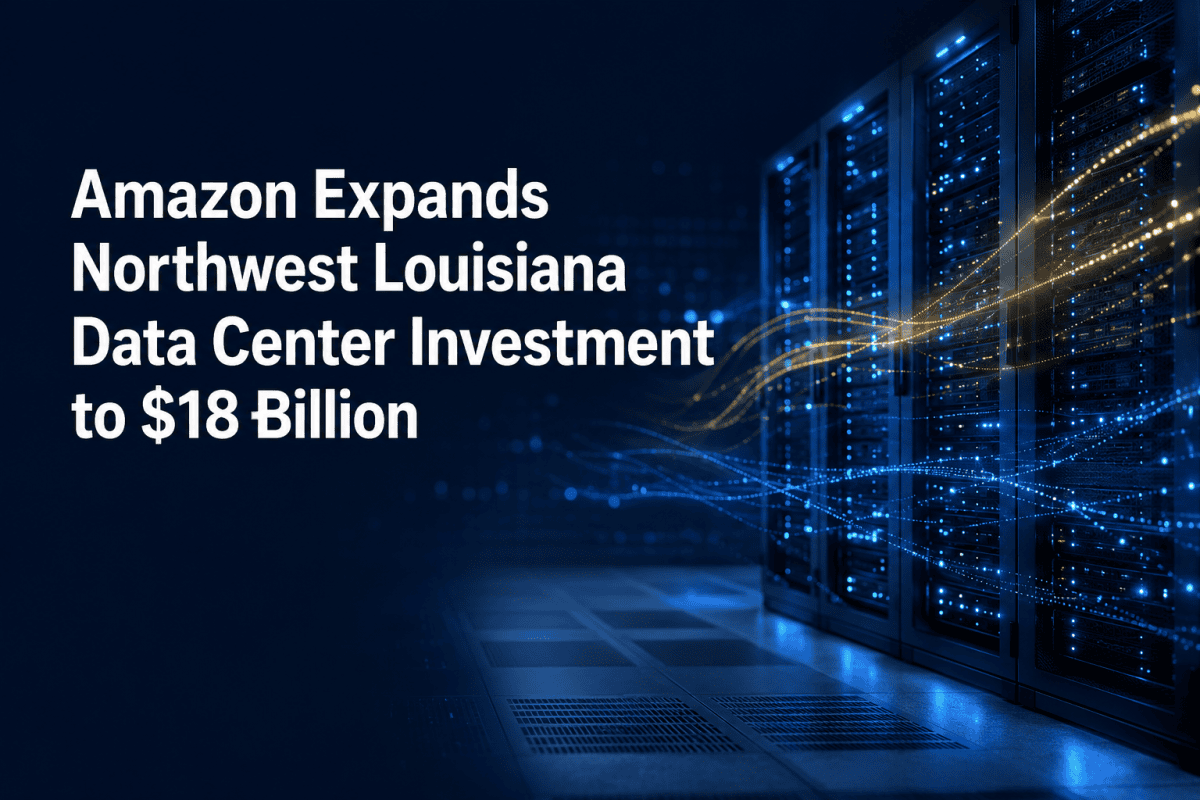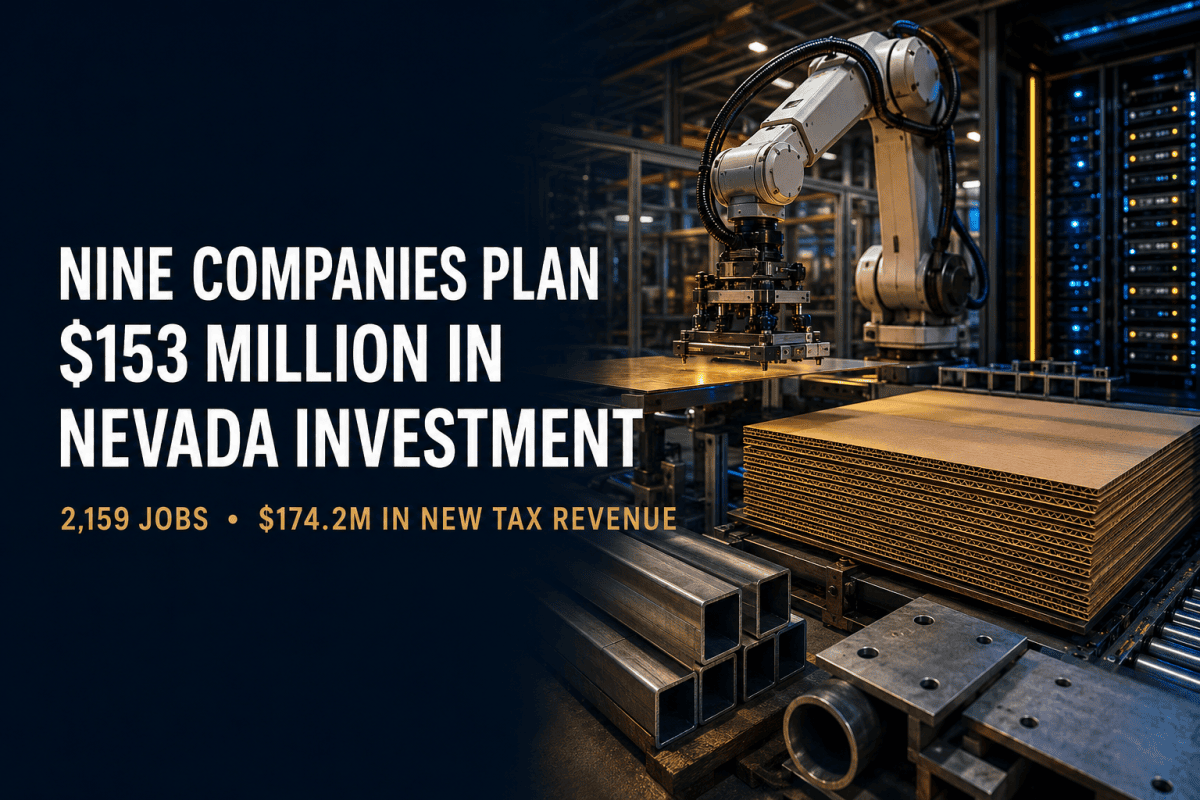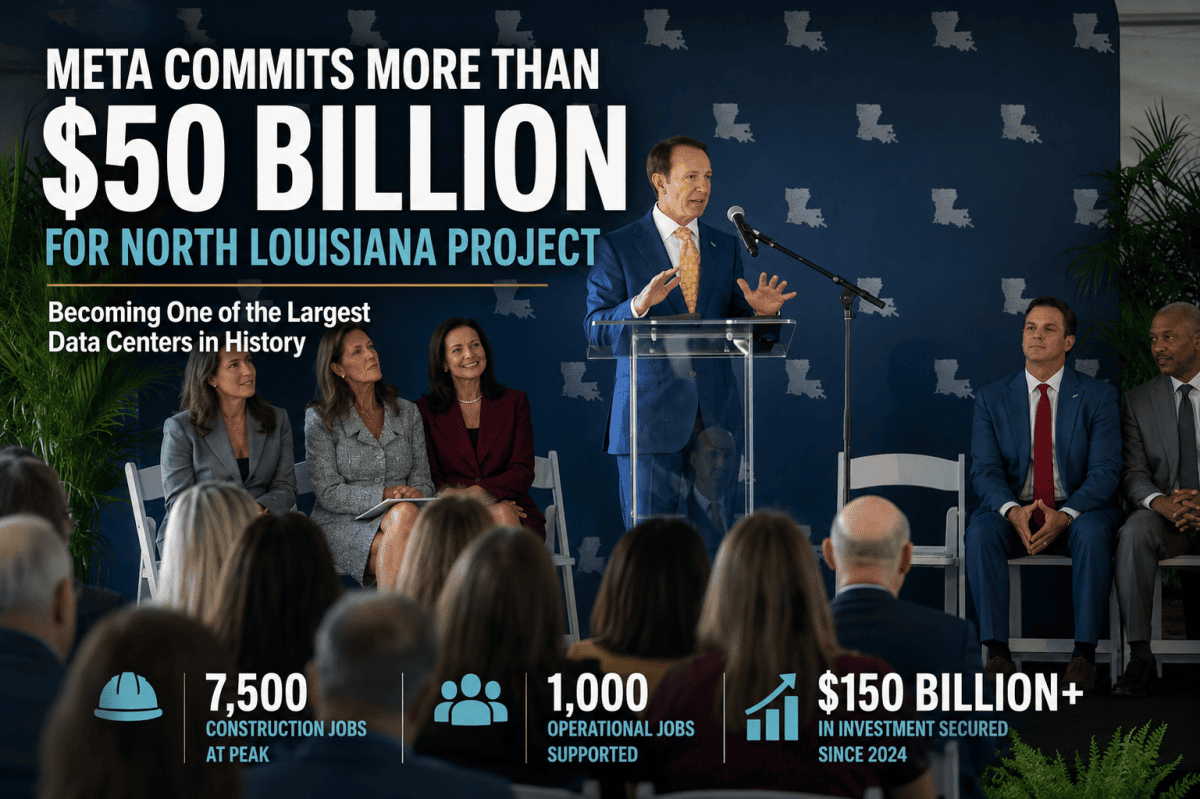

Wherever one lives, works or plays, chances are that they live near a data center. Given the amount of time that the average techie uses their desktop, laptop, flat screen, iPad, smartphone and/or smartwatch ― now with the burgeoning impact of artificial intelligence and quantum computing ― that might not be a surprise.
A look at the datacentermap.com reveals the numbers: there are already 4,259 centers operating in the U.S., with Virginia the epicenter, in an industry which employs more 500,000 people.
Then consider the enormity of these buildings, their impact and their energy demands: According to 2024 data from Research And Markets, the typical data center, through the design, build and manage phases, is valued at $208.4 billion; that number is projected to reach $308.9 billion in 2030. This equates to a market size growth of 48 percent over six years.
But then comes their immense energy needs. According to Pew Research Center, data centers consumed 183 terawatt hours of power (or 4.4 percent of the U.S. total) in 2024. That amount is projected to increase to 426 terawatts, or at least eight percent of U.S. power, by 2030. More on that later.
And because of the enormity of it all, these structures also create demand for increased workforce, as well as generate game-changing tax benefits for the hosting jurisdictions.
State Numbers
Consider, for instance, the observations of Kelly Schulz, CEO of the Maryland Tech Council. “The data center industry provides a rare opportunity at a pivotal moment for the state,” she said. “Maryland has the opportunity to boost its economic outlook and help resolve its looming budget deficit.”
There’s more, this time via the U.S. government. “The U.S. technology industry is expected to invest more than $500 billion in artificial intelligence, via the Stargate Initiative, [in] data center infrastructure by 2030,” said Schulz. “That presents Maryland with an opportunity to strengthen its economy and budget by supporting data center industry investment and job growth.”
Then comes the research the MTC commissioned via Baltimore’s Sage Policy Group. It indicated that a typical data center project in Maryland of approximately 800,000 square feet supports 5,000 direct and indirect jobs, and $775 million in economic activity, and generates approximately $18 million in tax revenues during construction.
Maryland is just one of the many states competing is the market. In Michigan, for instance, Gov. Gretchen Whitmer has submitted formal public comment to the state’s Public Service Commission in support of its multi-billion-dollar Stargate project in Saline Township, which is 46 miles southwest of Detroit and would be the largest business investment in state history. To be developed by Oracle and Related Digital, it would create more than 2,500 union construction jobs, more than 450 on-site permanent jobs and 1,500 additional jobs throughout the community.
The bottom line is that data has to be stored, somewhere ― and it’s not in what’s commonly referred to as “the cloud.” It’s stored in data centers.
Leading Locales
And that’s why AI and data storage “are driving the industrial sector’s massive expansion,” said Ford Graham, senior vice president for economic development at the Columbia, S.C., office of Richmond, Va.-based McGuire Woods. “Everyone is competing against Asia. China is in first place, with the U.S. second and Europe third in this building boom.”
Graham said that thousands of private companies “that touch the sector” as end users, developers, suppliers, etc., are getting into the action and looking nationwide for the right locations, “as their needs are as varied as their industries.”
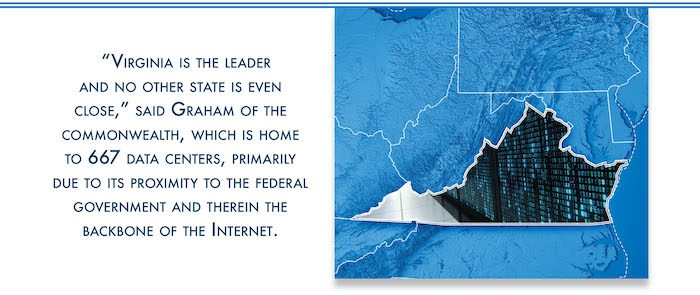
“Virginia is the leader and no other state is even close,” said Graham of the commonwealth, which is home to 667 data centers, primarily due to its proximity to the federal government and therein the backbone of the Internet. But that prominence wouldn’t have risen without Virginia’s business-friendly environment and the lack of buildable locations in adjacent Washington, D.C.
Today, however, many companies are locating elsewhere, with their needs often concerning an ample power supply. Today, developers and jurisdictions are investigating other budding hotbeds, like Texas (417 data centers), California (328), Illinois (244) and Ohio (215). In addition, these and other locales have learned from mistakes made in Virginia and other states that rate among the industry’s early accelerators.
“Today, data centers can be better insolated,” said Graham, “and they’re quieter, more aesthetically attractive and more agreeable to the local population. In addition, the data center people want to be good neighbors.”
Builders scanning the country for power can sometimes access it from another state. That can also benefit the general population, as it’s needed it for general usage. “It all means that natural gas is an important part of this conversation, as is nuclear energy,” said Graham, noting “an existing plant in Fairfield County, S.C., which may get back up and running.”
That’s important, because “it takes 20 years to permit for new nuclear,” said Graham, “as well as seven for natural gas and three for solar farms.”
He feels the main issue to address while the industry explodes “is NIMBYism. The NIMBYs know they need power, too, but they don’t want it near them,” he said, adding that many of the complaints he’s seen on social media “are from uniformed individuals.”
“However, in their defense,” Graham said, “the industry has not done a good job of telling its story and explaining the benefits. The data center companies have been reluctant to appear in the press [because] no company wants to be on the radar when they’re in the early stages of looking for sites,” he said, “and they’re always looking for power. However, that situation may be improving.”
But it’s not just power; data centers are always looking for infrastructure, period. “It is becoming more commonplace for communities to, at minimum, scrutinize potential data center projects due to their burden on local infrastructure,” said Matt Szuhaj, vice president for the Strategic Development Group, Oakland, Calif.
“In fact, some communities have placed moratoriums on new data centers. The need for additional data center capacity is only going to increase,” said Szuhaj, “but can infrastructure keep pace?”
As for development in more rural areas, Graham said the question is still power. “However, they usually have access and it adds some jobs, but not so many that it overwhelms a community. But data centers don’t create traffic or significantly increase demand for public services, schools, etc.”
The bottom line is that data centers offer “a good return on investment,” he said, “without the same drain on other resources, like roads, schools and county services.”
The Epicenter
In Northern Virginia, the home of “Data Center Alley,” Victor Hoskins noted the new approach data center companies are taking while searching for the right site.
“While we’re still experiencing high demand, nationally we’re seeing companies diversifying locations for different reasons,” said Hoskins, president and CEO of the Fairfax County Economic Development Authority, in Tysons Corner, Va., “notably access to power.”
But Hoskins said another factor concerns their time frames. “When a new data center is proposed for Fairfax County, developers have to plan 18 months to three years in advance to schedule power, buy land, access permitting,” etc., while “in other places, they’re available immediately.”
Then comes the need for water, “especially recycled water (or gray water, that isn’t entering homes),” he said, “to cool the machinery. While some observers have suggested building near water, you don’t want a flood, for instance.”
Not only is the industry in major expansion mode, the facilities “are going hyperscale (as opposed to smaller “co-los” or co-location facilities with multiple tenants),” said Hoskins, who cited one recent example in Meridian, Miss., where Compass Data Centers is building a campus of eight facilities that will each span 250,000 square feet.
He also said that some companies require proximity to their headquarters. Developers are “contemplating creative ways to build, especially due to latency issues. Some centers in New York City, for instance, are inside of older buildings, in part to be close to the financial markets.”
A building’s occupants, or lack thereof, is another factor in site selection. “There has recently been a demolition of an office park in Fairfax that was never occupied,” said Hoskins. “That land will soon be home to some new data centers.”
So as new projects rise, the demand for data centers in Fairfax, and Northern Virginia, have crested. “There’s limited capacity for future data center development in Fairfax County, but we do see a strong market going forward,” he said. “The reason is AI, the need for new chips in the computers and facility maintenance. It’s pushing demand across the industry.”
However, Hoskins thinks there will be ample demand “in the mid-Atlantic for the next 10 years, especially along the I-95 Corridor,” he said.
While accessing water is less of an issue, the intense need to obtain power could mean going nuclear. “Using Small Modular Reactors, which have been used in every nuclear sub and every air force carrier for about four decades, is being explored,” Hoskins said, “and our state has a huge facility in Hampton Roads, where these subs are built.”
Dennis Donovan concurred. “An innovative nuclear power concept that will contribute to meeting data center power needs in the next few years is SMRs,” said Donovan, principal with Wadley Donovan Gutshaw Consulting, Bridgewater, N.J., of the factory-built nuclear reactors that ship to site for final assembly.
SMRs can provide up to 300 megawatts of carbon-free energy and “will be able serve a single, large-scale data center,” said Donovan. “A number of tech companies, such as Amazon, have committed to the technology.”
“SMRs provide more nuclear power without building another plant,” Hoskins said, “but we’ll also have to build our workforce for this approach.”
Non-Epicenters
“It’s somewhat analogous to winning your favorite retailer’s distribution center.” That’s Darin Buelow comparison of a jurisdiction winning a data center project. “They’re almost ubiquitous,” he said. The principal at the Chicago office of Deloitte Consulting also offered other observations.
“Hyperscalers need to get their assets aligned and get moving,” said Buelow, with a nod to Hoskins and Donovan. “Power has been a limiting factor, but the centers are now so big that they bring the power with them, often adding natural gas turbines to the mix.”
And like Graham, he alluded to “NIMBYism. Numerous rumors and misinformation abound,” he said, “but, by and large, this is a clean industry and it’s not draining aquifers. There is very little to be concerned about.”
As for employment, the largest data campuses “can require 1,000 jobs during construction, so acquiring labor is part of the deal,” said Buelow. “You have to locate them where engineers want to live and hire enough electricians to get them built.”
Indeed, most states “already have many data centers. Name just about any state, and one would find data centers already there or looking at potential sites,” he said. “Even the states that haven’t focused on this industry are drawing interest from developers.”
Even states Buelow’s office might place on a “least desirable” list are getting phone calls, especially if they have the infrastructure, though a center “can’t be in desolate a place. Companies need the grid connection, plus they need backup; and its employees need schools, shopping, services,” etc.
“But even then,” he said, “there are data centers in rural markets, too.”

Economic Mix
The economic boost data centers can give a state is undeniable, and there are continuous needs even after the initial economic impact. “The initial taxes can provide a nice windfall communities can invest in education, roads, infrastructure,” etc., said Buelow, “and they aren’t industrial facilities that can come with traffic, pollution,” etc.
The time to makes deals, he said, is now. “We’re in the gold rush period,” he said, “and we’ve seen no evidence of a slowdown. The data center market will be very active for at least the next several years.”
“When construction is done, there are permanent jobs, property taxes for various jurisdictions and taxes on equipment that needs to be swapped out every other year,” he said. “Communities need diversified portfolios with industrial, office, manufacturing and retail locations, and looking ahead, data centers.
“A good economy,” he said, “will have all of those things.”
About the Author: Odenton, Maryland-based Mark R. Smith joined Expansion Solutions after having written about site selection among the vast number of topics he has covered in the business universe. That part of his career began in 1993 when he joined The Daily Record, a Baltimore business and legal publication, where he delved into the worlds of economic development and commercial real estate, among numerous other industries; in 2003, he was named editor-in-chief of The Business Monthly, another Maryland publication that covers the scene in the Baltimore-Washington Corridor counties.\
Concurrently, he’s written at length about the film and video industry for a variety of publications, and about his other loves, including music, sports and leisure.