Multi-port partnership examines new opportunities to link Great Lakes and Inland Waterways freight networks
WASHINGTON, D.C. — A coalition of Great Lakes ports and federal maritime partners has launched a comprehensive market study to explore new opportunities to expand cargo movements between the Great Lakes and the U.S. Inland Waterways system — a move aimed at strengthening supply chain resilience, improving freight efficiency, and supporting economic growth across key industrial regions.
The study, announced by the American Great Lakes Ports Association (AGLPA) in partnership with the Great Lakes St. Lawrence Seaway Development Corporation (GLS), will evaluate how to better integrate the two inland marine transportation networks through expanded waterborne trade.
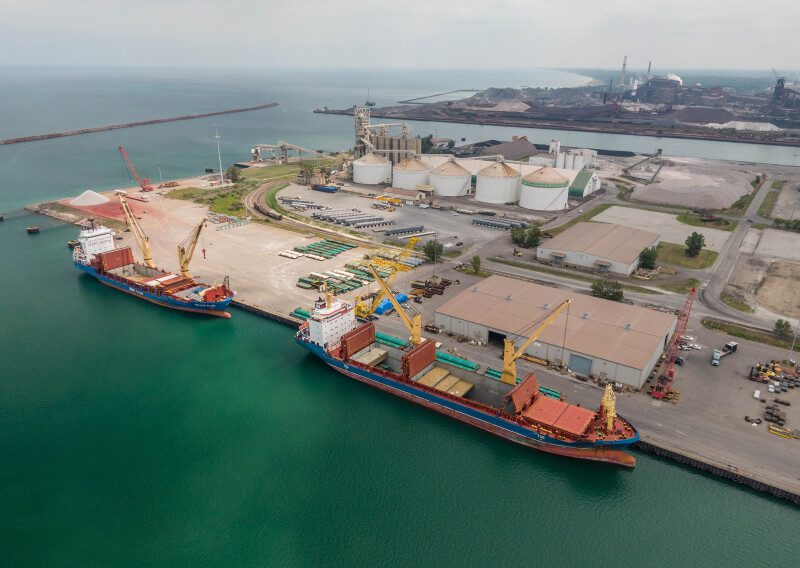
Participating ports include major Lake Michigan hubs in Indiana, Illinois, and Wisconsin. Together, the Great Lakes and Inland Waterways systems handle nearly 700 million tons of cargo annually, serving critical industries such as steel, agriculture, energy, and advanced manufacturing. Despite their geographic connectivity, only a small percentage of cargo currently transfers between lake vessels and river barges.
Strengthening Multimodal Freight Connections
The study will analyze:
- Potential cargo flows and emerging market demand
- Infrastructure and terminal capacity needs
- Operational requirements for transloading and vessel interchange
- Opportunities to improve supply chain reliability
- Impacts on employment and landside freight congestion
Mike McCoshen, administrator of GLS, said stronger river–lake linkages could expand freight options for exporters and manufacturers while enhancing national supply chain resilience.
AGLPA President Paul C. LaMarre III emphasized the data-driven nature of the initiative, noting that the study will identify cargo types, markets, and facility investments needed to make combined river–lake shipping commercially viable.
Regional Economic Impact
The three Lake Michigan states involved — Indiana, Illinois, and Wisconsin — represent a significant share of Great Lakes maritime economic activity. They also support barge traffic moving through the Chicago Area Waterway System and the Mississippi River network, positioning the region as a strategic freight crossroads.
“We’re excited to join this unprecedented partnership to explore how we can better connect two of the busiest inland shipping corridors in the world,” said Jody Peacock, CEO of Ports of Indiana. “Maritime transportation can be further leveraged in the megaregion formed by Chicago, Milwaukee, and Northwest Indiana to improve freight transportation, lower emissions, reduce highway congestion, and grow economies throughout the Great Lakes and inland waterways systems.”
Study Leadership
The research will be conducted by CPCS Transcom Inc. in coordination with AGLPA, GLS, and participating ports. The local cost share is being provided by the three Lake Michigan port authorities.