
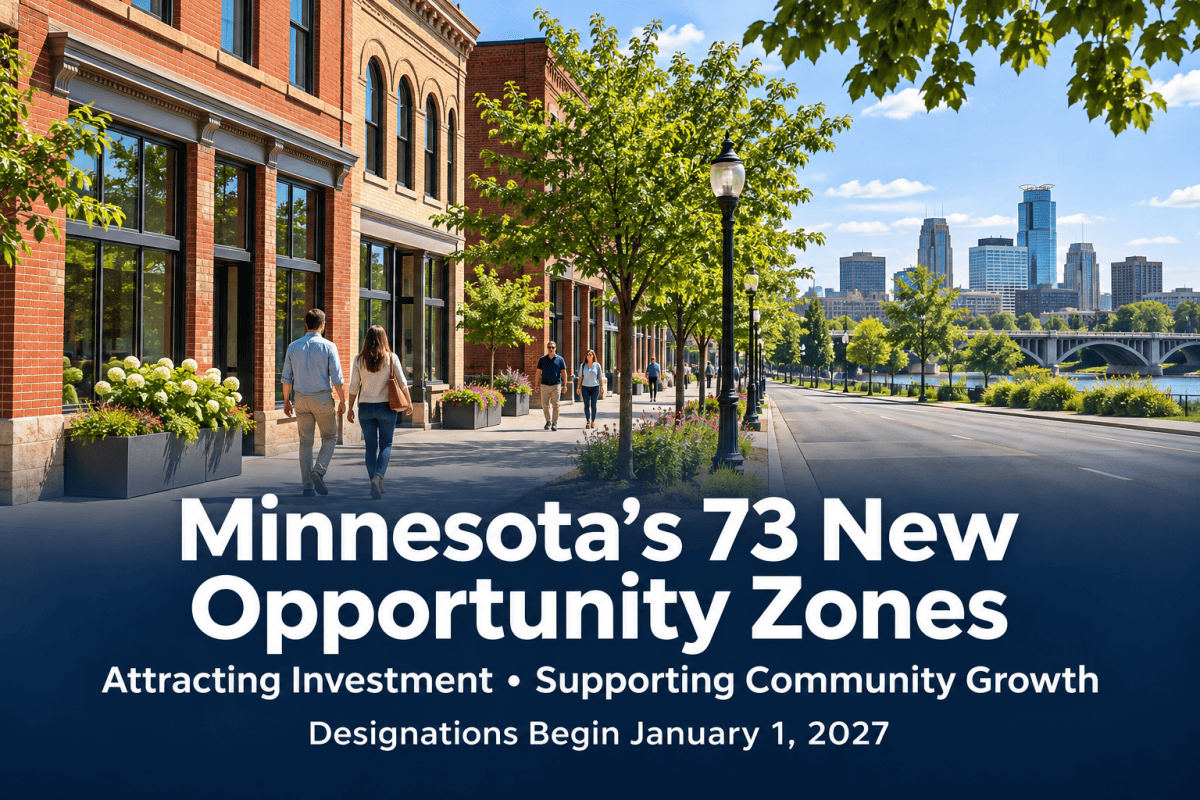
Federal designations take effect January 1, 2027, supporting business development, housing and revitalization across Minnesota
ST. PAUL, Minn. — Minnesota’s 73 newly nominated census tracts have received federal approval for Opportunity Zone designation, opening opportunities to attract private investment in business development, housing and community revitalization beginning January 1, 2027.
The U.S. Department of the Treasury approved all 73 tracts nominated by Gov. Tim Walz. The designations support the Walz-Flanagan Administration’s priorities for economic development and investment in communities across the state.
Opportunity Zones Encourage Private Investment
The federal Opportunity Zone program offers capital gains tax incentives to eligible investors who reinvest through Qualified Opportunity Funds supporting qualifying real estate or business projects in designated areas.
Depending on applicable requirements, investors may qualify for tax deferral, reductions or exclusions. The new round includes enhanced tax benefits for rural investments and expanded reporting to help track the types of development supported by the program.
Minnesota’s first round of Opportunity Zones, designated in 2018, attracted more than $910 million in investment, with investment reaching 76% of the state’s zones.
Local Input Helped Shape Minnesota’s Designations
Minnesota selected its nominated tracts using input from counties, cities and tribal governments, which identified local priorities for eligible areas.
Thirty-five counties, four cities of the first class and two tribal governments participated in the process.
“These 73 new Opportunity Zones will help attract private investment and support good-paying jobs across Minnesota,” said Minnesota Department of Employment and Economic Development Commissioner Matt Varilek. “As an investment tool, local partners and communities can now leverage this opportunity for economic growth.”
The designations give communities another tool to encourage investment in projects aligned with local economic development, housing and revitalization goals.
New Designation Cycle Begins in 2027
Under the federal program, governors may nominate up to 25% of eligible census tracts in their states. Minnesota had 291 eligible tracts in the current selection cycle.
Beginning in 2026, Treasury will publish eligible census tracts every 10 years. States submit nominations, with final designations certified and approved by Treasury.
Minnesota’s role in the designation process is limited to the initial nomination step.
A map and complete list of Minnesota’s 73 newly designated Opportunity Zones are available on DEED’s Opportunity Zones webpage.
About Minnesota DEED
The Minnesota Department of Employment and Economic Development is the state’s principal economic development agency. DEED supports business recruitment, expansion and retention, workforce development, international trade and community development.
Learn more at mn.gov/deed.