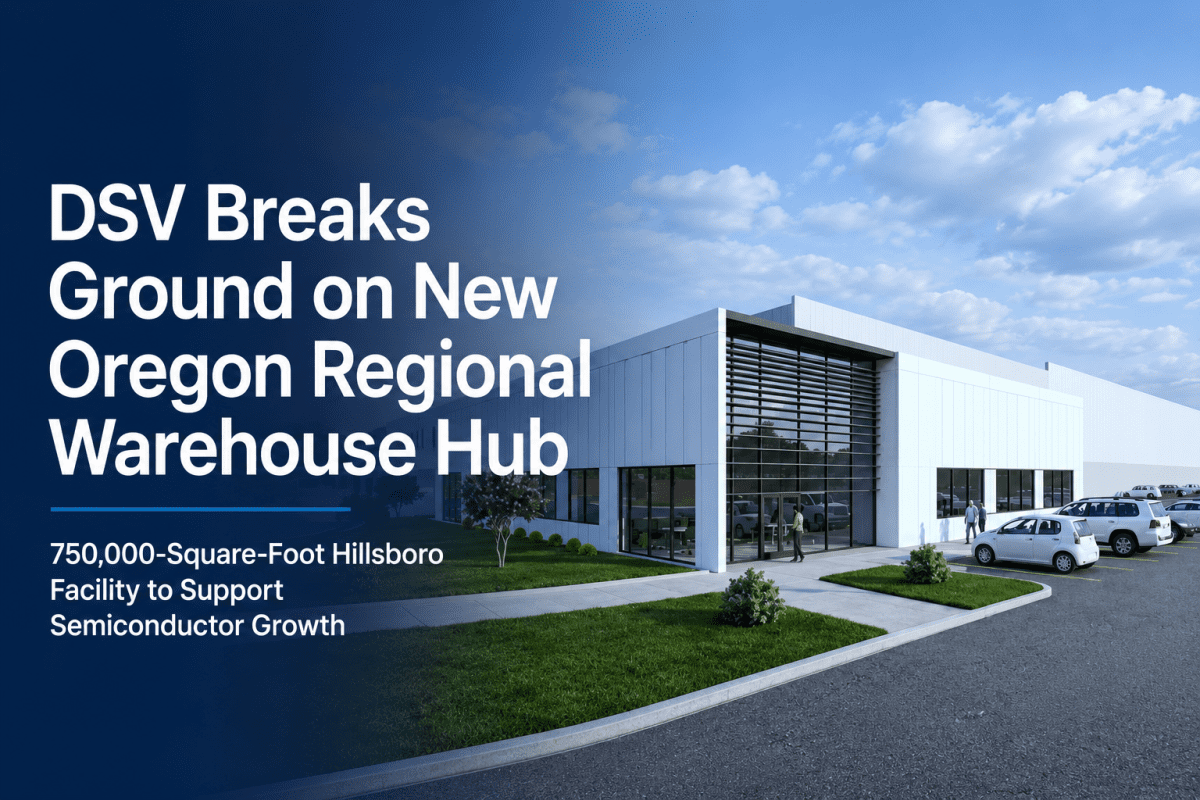

Semiconductor expansion, biotechnology investment and international trade connections reinforce Oregon’s diverse manufacturing economy.
Oregon’s economic development story combines advanced technology with industries rooted in production, natural resources and global trade.
Its semiconductor cluster remains a defining strength, while biotechnology and food manufacturing contribute additional opportunities for investment.
For companies evaluating expansion locations, Oregon offers established industrial expertise and networks of suppliers, research partners and experienced workers.
Recent announcements demonstrate the value of those connections as the state works to retain employers, attract new projects and translate innovation into commercial activity.
Semiconductor Investment Builds on the Silicon Forest
Oregon’s semiconductor economy extends beyond chip production to include equipment, materials, research and specialized services.
Intel’s Hillsboro operations remain central to that ecosystem. The company identifies Oregon as the heart of its process technology research and development, with its D1X development factory supporting advances in semiconductor manufacturing.
Lam Research’s expansion in Tualatin provides a recent example of continued investment in the cluster. In August 2026, the company broke ground on an expansion that state officials described as a $1.7 billion investment.
Once completed, the project is expected to create more than 400 direct, high-wage jobs and support thousands of indirect positions.

Lam supplies semiconductor manufacturing equipment and services, placing its Oregon operations within the infrastructure needed to produce increasingly sophisticated chips. The company received $22 million through the Oregon CHIPS Act to support the expansion.
The project also highlights the importance of established industry relationships. For suppliers and technical service providers, proximity to major semiconductor employers can create opportunities to support research, equipment development and manufacturing operations.
Oregon has backed the sector through its CHIPS Fund, authorized in 2023 with up to $240 million in direct incentives.
The program was designed to strengthen industry competitiveness and help Oregon companies pursue federal semiconductor resources.
Biotechnology Adds Manufacturing Momentum
Oregon’s advanced manufacturing strengths are also attracting investment in life sciences.
In August 2026, Genentech announced a $750 million expansion of its Hillsboro campus, expected to create 450 manufacturing and construction jobs.
Established in 2006, the campus is an important part of Genentech’s U.S. manufacturing network, supporting therapies across oncology, immunology and neurology.
 The new facility will add device-filling capability, expanding the company’s domestic production capacity.
The investment builds on existing infrastructure, manufacturing experience and a skilled workforce. It demonstrates how an established operation can become a platform for additional production responsibilities.
For Oregon, the project strengthens the connection between bioscience and industrial development. Potential benefits extend to businesses providing equipment, facility services, logistics and other support required by technically demanding manufacturing operations.
Food Manufacturing Supports Regional Economies
Food manufacturing provides a broader geographic foundation for Oregon’s economy.
According to the Oregon Employment Department, the industry employed approximately 28,200 people in 2025 and operated in 33 of the state’s 36 counties.
Frozen foods represented its largest employment segment, followed by bread and bakery products. Other significant categories included fruit and vegetable preservation, meat processing, dairy products and seafood.
The sector generated more than $1.6 billion in payroll during 2025.
Its presence across both metropolitan and rural communities makes it an important source of production employment and demand for supporting services.

Employment has remained relatively stable in recent years, underscoring the value of established operations alongside new investment announcements.
For expanding food businesses, Oregon’s existing industry base offers a starting point for evaluating workforce availability, processing expertise and supplier relationships.
Trade Connections Support Market Access
International access is another component of Oregon’s business proposition.
The Port of Portland’s Terminal 6 is home to the state’s only international container terminal and handles containers, automobiles and breakbulk cargo.
Its intermodal yard and rail infrastructure connect maritime activity with inland transportation, supporting businesses moving goods through the Pacific Northwest.
In January 2026, Oregon Container Terminal officially launched at Terminal 6 following the transition of operations from the Port of Portland to Harbor Industrial, preserving a regional supply chain option.
For manufacturers, continued container service adds an option when evaluating inbound materials, overseas customers and distribution costs.
The practical advantage depends on aligning available services with each company’s shipping requirements.
Turning Industry Strengths into Growth
Oregon’s Prosperity Roadmap focuses on retaining and growing businesses, creating jobs and accelerating economic growth.
Its priorities include infrastructure investment, stronger business outreach and modernization of economic development tools. The state has also launched a Global Trade Desk to support commercial connections and investment.
For site selectors, Oregon’s strongest opportunities lie where established expertise meets a project’s specific needs.
Semiconductor research, biotechnology production, food processing and trade infrastructure provide distinct foundations.
Coordinating workforce preparation, suitable sites and reliable infrastructure will determine how effectively Oregon converts those strengths into its next generation of operating facilities and lasting employment.