Expansion will support South Carolina’s automotive industry and create additional cargo capacity at Columbus Street Terminal
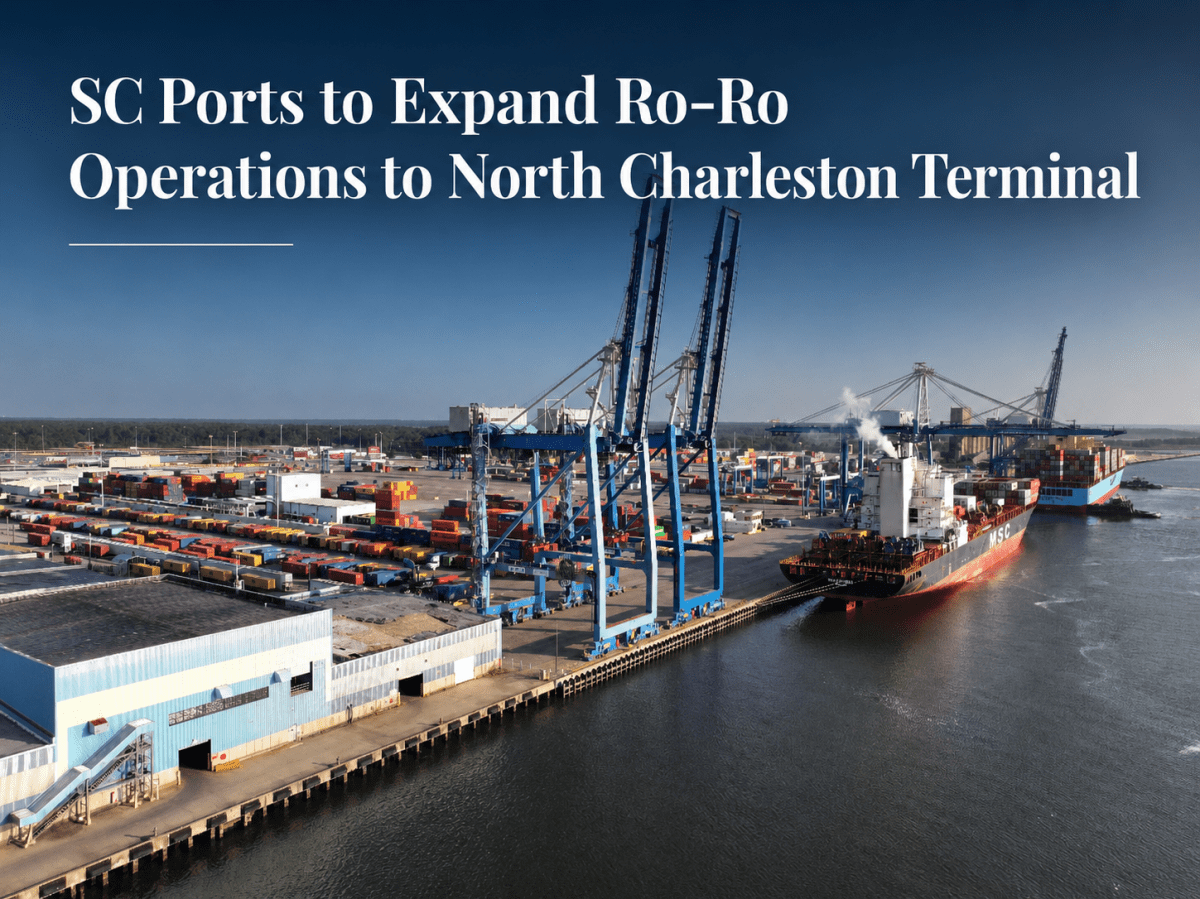
CHARLESTON, S.C. — South Carolina Ports is advancing plans to expand roll-on/roll-off cargo operations to the rail-served North Charleston Terminal, a strategic move designed to support South Carolina’s growing automotive industry and create additional capacity for future cargo opportunities at the Port of Charleston.
SC Ports’ Board of Directors voted May 15 to approve the project’s design contract, marking the first step in preparing the former paper mill site for future port operations. The planned expansion will add ro-ro capabilities at North Charleston Terminal while opening additional capacity at Columbus Street Terminal for new waterborne commerce.
For decades, SC Ports has served as a critical supply chain partner for South Carolina’s automotive sector, supporting manufacturers, exporters and logistics providers with access to global markets.
“South Carolina is home to some of the world’s largest advanced manufacturers, who rely on the Port of Charleston to keep their supply chains fluid and businesses competitive,” said SC Ports President and CEO Micah Mallace. “SC Ports cares deeply about serving our customers. This plan demonstrates our commitment to investing in timely projects to meet their needs, and it ensures capacity to meet their growth every step of the way.”
North Charleston Terminal Expansion Supports Ro-Ro Cargo Growth
The project aligns with SC Ports’ strategy to invest in infrastructure that can generate near-term cargo growth and revenue while supporting long-term port expansion.
SC Ports acquired the adjacent former paper mill site in 2024 with support from the state. Demolition of the site is expected to begin this summer. Work to prepare North Charleston Terminal for ro-ro operations is scheduled to begin in 2027, with completion anticipated in 2028.
The planned expansion includes:
- New ro-ro cargo capabilities at North Charleston Terminal
- Rail infrastructure upgrades
- Expanded use of the former paper mill site
- Additional cargo flexibility for the Port of Charleston
- More capacity at Columbus Street Terminal for breakbulk and other cargo
- Support for automotive supply chains and future manufacturing growth
Breakbulk and ro-ro operations are currently handled at Columbus Street Terminal, which has capacity to move more than 250,000 vehicles annually through the Port of Charleston. By shifting some ro-ro operations to North Charleston Terminal, SC Ports will create new opportunities for cargo growth across its existing terminal network.
“We are committed to growth, and we will use every acre of our real estate to welcome new cargo opportunities to Charleston,” Mallace said. “Growth at the port drives opportunity within our maritime community and creates jobs around our state.”
Rail-Served Terminal Enhances Automotive and Manufacturing Logistics
The North Charleston Terminal expansion will be supported by rail upgrades and enhanced terminal capabilities. Rail operations will be served by SC Ports’ rail partner, Palmetto Railways.
“As a trusted partner of SC Ports, Palmetto Railways is dedicated to providing efficient rail cargo handling and terminal switching services across all SC Ports marine terminals,” said Patrick McCrory, President and CEO of Palmetto Railways.
McCrory said the project builds on the area’s existing rail infrastructure and strengthens the port’s ability to support future cargo growth.
“SC Ports’ initiative to provide expanded rail services at its North Charleston Terminal builds on robust existing rail infrastructure and improves capacity for future cargo growth,” McCrory said. “Together, we will continue working seamlessly to enhance service for our shared customers for ro-ro operations at North Charleston Terminal, while also collaborating on future business growth opportunities at Columbus Street Terminal.”
South Carolina Strengthens Position in Automotive Exports
The expansion comes as South Carolina continues to hold a leading role in the U.S. automotive export market. According to the South Carolina Department of Commerce, the state held the largest U.S. market share, at 18 percent, of completed passenger vehicle export sales.
The Port of Charleston plays a central role in supporting that momentum by connecting South Carolina manufacturers with global markets through reliable port operations, rail connectivity and cargo capacity.
With automotive manufacturing, advanced manufacturing and port-dependent logistics continuing to drive economic growth across the state, SC Ports’ investment in ro-ro infrastructure will help strengthen South Carolina’s long-term competitiveness.
About South Carolina Ports
South Carolina Ports owns and operates marine terminals at the Port of Charleston and two rail-served inland ports in Greer and Dillon. As the 8th largest U.S. container port, SC Ports connects port-dependent businesses throughout the Southeast and beyond to global markets.
SC Ports proactively invests in infrastructure ahead of demand to provide reliable service, efficient operations, cargo capacity, an expansive rail network and the deepest harbor on the East Coast at 52 feet. SC Ports is a vital economic engine for South Carolina, with port operations supporting 1 in 9 jobs statewide.
Learn more at scspa.com.