
Application advances licensing strategy while reducing long-term costs and risks for customers and investors
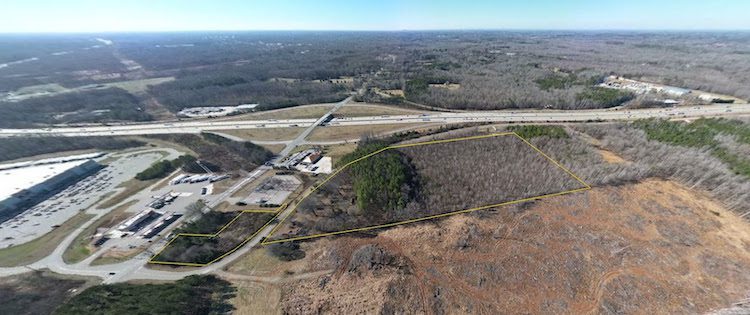
CHARLOTTE, N.C. (Jan. 8, 2025) — Duke Energy has submitted an early site permit (ESP) application to the U.S. Nuclear Regulatory Commission (NRC) for property near its Belews Creek Steam Station in Stokes County, North Carolina, marking a major milestone in the company’s long-term evaluation of advanced nuclear energy options.
The application concludes nearly two years of technical, environmental, and regulatory analysis and reflects Duke Energy’s strategic approach to ensuring reliable, affordable, and carbon-free electricity to meet growing customer demand across the Carolinas.
An ESP is an optional NRC licensing step that allows utilities to resolve site-specific environmental and safety issues early in the development process—before selecting a specific reactor design or committing to construction. If approved, the permit would significantly reduce regulatory risk, shorten future licensing timelines, and lower potential costs for customers and investors should Duke Energy move forward with new nuclear generation at the site.
“This submission represents an important step in responsibly planning for our region’s future energy needs,” said Kendal Bowman, Duke Energy’s North Carolina president. “Nuclear energy has long played a critical role in powering the Carolinas, and this early site permit application allows us to evaluate the potential for next-generation small modular reactors at the Belews Creek site.”
Technology-Neutral Approach to Advanced Nuclear
The ESP application is technology-neutral, enabling Duke Energy to assess and select a reactor design later in the development process. The filing evaluates six advanced reactor technologies, including four small modular reactor (SMR) designs and two non-light-water reactor concepts. Large traditional light-water reactors—like the 11 nuclear units Duke Energy currently operates in the Carolinas—are not included in the application.
“We’re advancing licensing activities in a way that reduces risk, preserves flexibility, and allows emerging technologies to mature,” said Kelvin Henderson, Duke Energy’s chief nuclear officer. “This approach positions us to make informed decisions that deliver long-term value for our customers.”
Optionality for Future Energy Needs
Duke Energy has not yet made a final decision to build new nuclear units in Stokes County. However, securing an early site permit would provide future optionality as the company continues to evaluate advanced nuclear technologies as part of its broader energy transition strategy.
If ongoing assessments confirm that small modular reactors at the Belews Creek site offer the best value for customers, Duke Energy anticipates adding up to 600 megawatts of advanced nuclear capacity by 2037, with the first SMR potentially entering service as early as 2036.
Additional information about Duke Energy’s evaluation of advanced nuclear generation in Stokes County, including frequently asked questions, is available at duke-energy.com/stokes.
About Duke Energy
Duke Energy (NYSE: DUK), a Fortune 150 company headquartered in Charlotte, North Carolina, is one of the largest energy holding companies in the United States. Its electric utilities serve 8.6 million customers across North Carolina, South Carolina, Florida, Indiana, Ohio, and Kentucky, with a total generating capacity of approximately 55,100 megawatts.
The company’s natural gas utilities serve 1.7 million customers in North Carolina, South Carolina, Tennessee, Ohio, and Kentucky.
Duke Energy is executing a comprehensive energy transition strategy focused on reliability, affordability, and sustainability. The company is investing in grid modernization and cleaner generation resources, including nuclear, natural gas, renewables, and energy storage.
More information is available at duke-energy.com and the Duke Energy News Center. Follow Duke Energy on X, LinkedIn, Instagram, and Facebook, and visit Illumination for stories highlighting the people and innovations driving the energy transition.