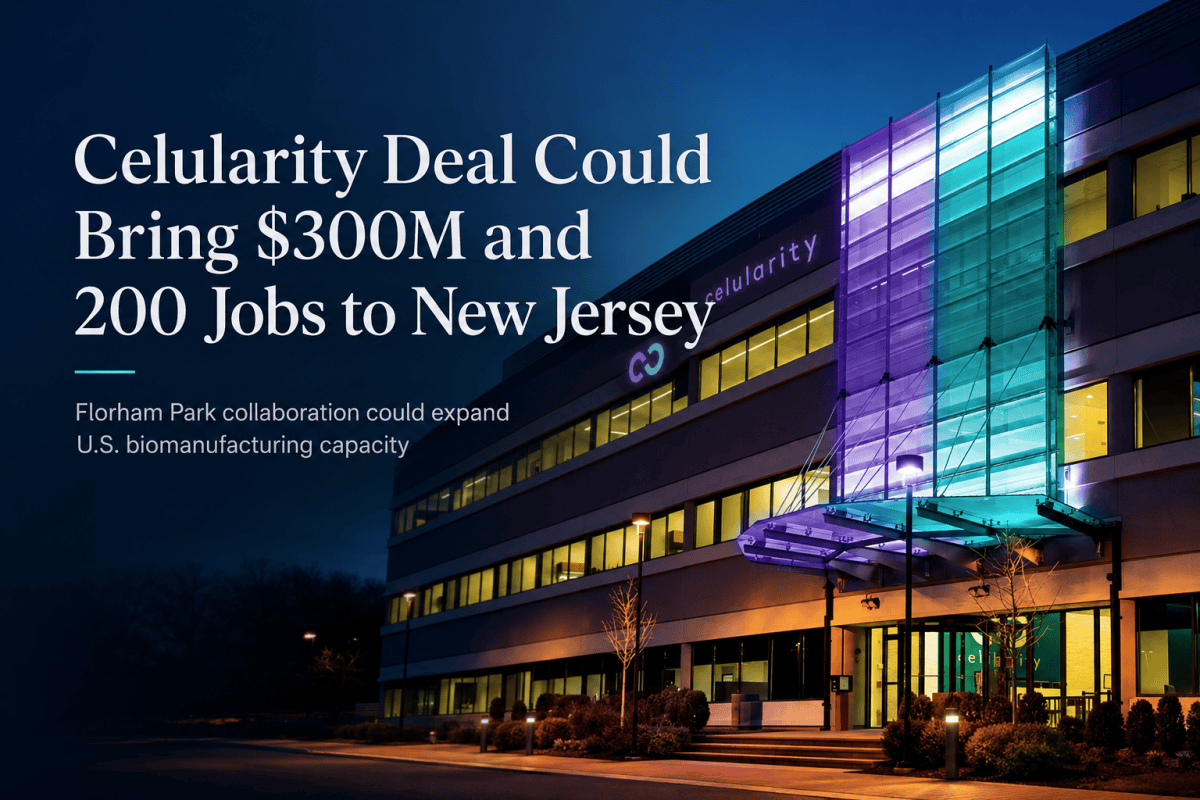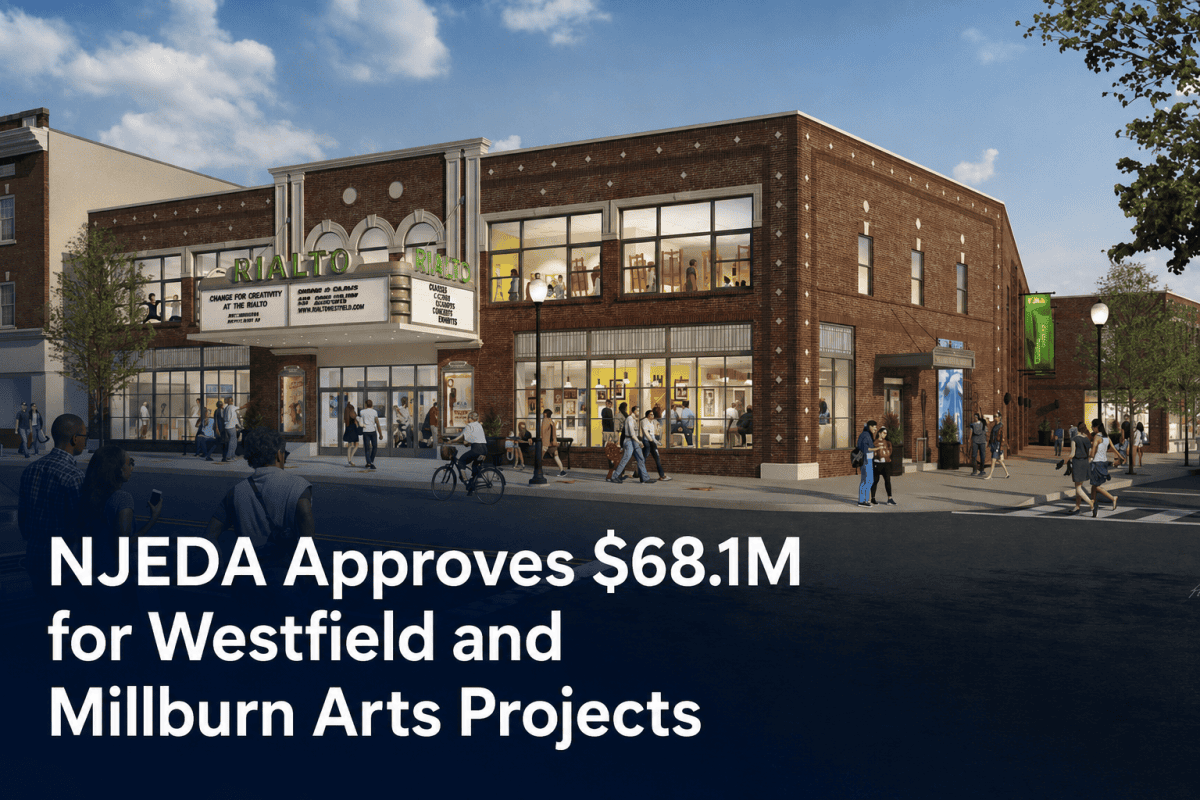
New Jersey’s economic development strategy is built around density: dense talent, infrastructure, research assets, consumer markets and global connections. One-third of the U.S. population and economy is reachable within a day’s drive, while the Port of New York and New Jersey, Newark Liberty International Airport and the state’s rail and highway network provide uncommon market access. In 2026, the state is using that location advantage alongside targeted incentives to deepen life sciences, advanced manufacturing, technology, film and mixed-use development.
Life Sciences Drive New Investment
Life sciences remain the clearest expression of New Jersey’s competitive identity. BeOne Medicines received approval in July 2026 for support through the Next New Jersey Manufacturing Program as it plans a $300 million expansion at its Hopewell campus. The project will add a 145,000-square-foot small-molecule pharmaceutical manufacturing facilityand create 120 full-time jobs. It follows BeOne’s opening of an $800 million flagship U.S. manufacturing and clinical research campus in 2024, demonstrating how an initial recruitment can generate follow-on investment when a company finds the workforce, utilities and regulatory infrastructure needed to grow.

Incentives Support Domestic Pharmaceutical Production
The state authorized a $33.9 million, five-year award for the BeOne project. Next New Jersey Manufacturing is designed to attract significant capital investment and good-paying production jobs through competitive, transferable tax credits. The program broadens the state’s toolkit at a time when pharmaceutical companies are reassessing domestic supply chains and federal policy is increasing attention on U.S. production of medicines and critical inputs. For New Jersey, the opportunity is to translate its research legacy into more commercial-scale manufacturing.
Innovation Programs Move Closer to Companies
Innovation policy is also moving closer to the companies it aims to support. NJ BASE opened in Jersey City as a landing pad for international businesses entering the U.S. market. Its first cohort is designed for approximately 15 to 20 companies in cybersecurity, artificial intelligence, fintech and other priority sectors, providing workspace, business-immersion services and connections to the state’s corporate and investment networks. The New Jersey Innovation Evergreen Fund is using public-private capital to support high-growth companies; five businesses received funding through the program in March 2026. A separate partnership between NJEDA and RWJBarnabas Health committed up to $5 million to a life-sciences investment fund serving companies at the HELIX innovation district in New Brunswick.
Film and Television Build Permanent Infrastructure
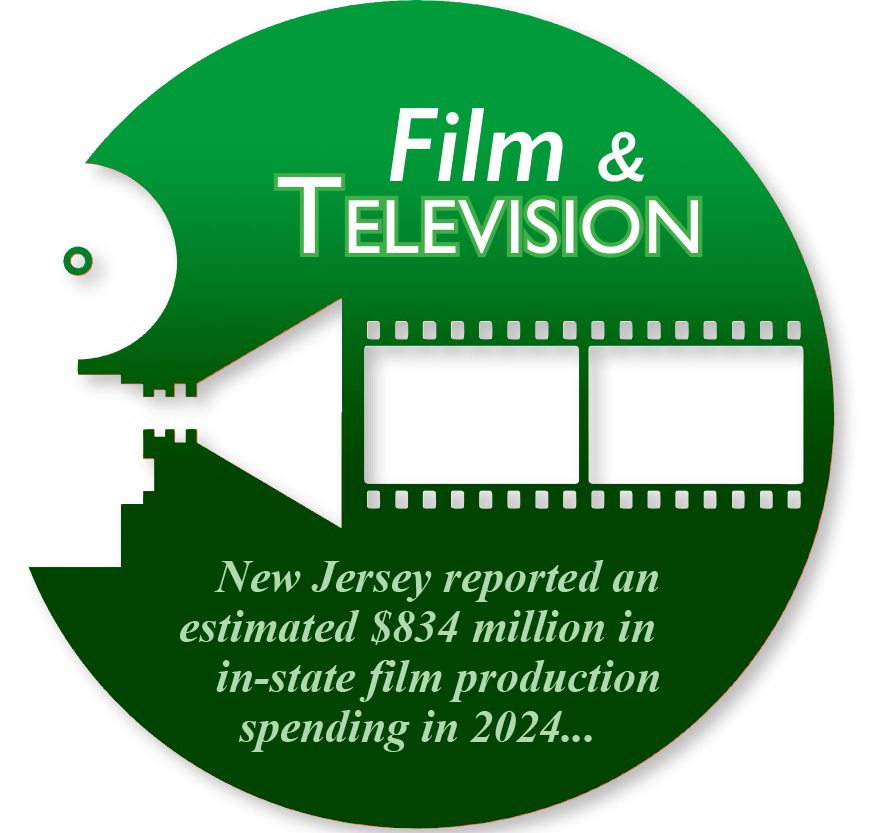
Film and television are becoming a visible component of the development pipeline. New Jersey reported an estimated $834 million in in-state film production spending in 2024, exceeding the previous record. New facilities are turning temporary production activity into permanent real estate, training and supplier demand. Lionsgate Studios Newarkreached a major financing milestone in August 2026 with the closing of a $101 million Garden State C-PACE loansupporting energy efficiency, renewable power, water conservation and electric-vehicle charging. The 12-acre complexwill contain six soundstages and production-support space, with completion expected in 2027. Netflix’s Fort Monmouth studio and 1888 Studios in Bayonne add further scale.
Creative-Economy Financing Expands
The financing structure is as important as the facilities. New Jersey’s Film and Digital Media Tax Credit can provide enhanced benefits for designated studio partners that commit to long-term occupancy. Garden State C-PACE, launched in 2025, enables municipalities and private capital providers to finance eligible energy and resiliency improvements through property assessments; the program had closed more than $176 million in financing by August 2026. These tools reduce development barriers while advancing the state’s clean-energy and infrastructure goals.
Place-Based Programs Target Community Growth
Broader place-based incentives remain central. The Emerge Program provides per-job tax credits for projects that create or retain good-paying jobs and invest private capital, with priority for targeted sectors and communities. Aspire supplies gap financing for commercial, residential and mixed-use projects, though demand led NJEDA to pause new applications while revising criteria. That pause highlights both the program’s popularity and the need to target limited tax-credit capacity toward developments that produce measurable public benefits.
International Investment Gains Momentum
New Jersey’s international strategy is producing additional momentum. Choose New Jersey reported that foreign direct investment grew from $5.6 billion to $13.6 billion over eight years, alongside more than 3,000 jobs from international companies. Global business centers and the Jersey City landing pad are designed to sustain that pipeline, using the state’s cultural diversity and proximity to New York and Philadelphia as recruitment assets.
Addressing the Cost of Growth
The central challenge is cost. Real estate, energy, taxes and regulatory complexity can weaken even a talent-rich location. New Jersey’s response is increasingly sector-specific: use incentives to close genuine financing gaps, invest in innovation districts and workforce, and concentrate growth where transit and infrastructure already exist. If execution remains disciplined, the state can convert its geographic advantages into durable production, research and creative-economy jobs rather than relying solely on proximity to neighboring markets.
Workforce Partnerships Strengthen Public Value
Workforce partnerships can open technical careers while helping employers fill specialized positions. Linking incentives to wages, hiring and long-term occupancy gives the state a practical measure of lasting public value.