Research and Development Parks Evolve Into Innovation Ecosystems
It wasn’t so long ago that the concept of a science park did not require a major amount of thought — or even the flicker of a figurative light bulb.
They were, generally, a collection of buildings that served the research market, often located near a college or university.
However, today’s research and development parks, which are often built within what is now known as an innovation district, “don’t look, or operate, the way they used to,” said Carol Stewart, vice president of Tech Parks Arizona, located at the University of Arizona in Tucson, Arizona.
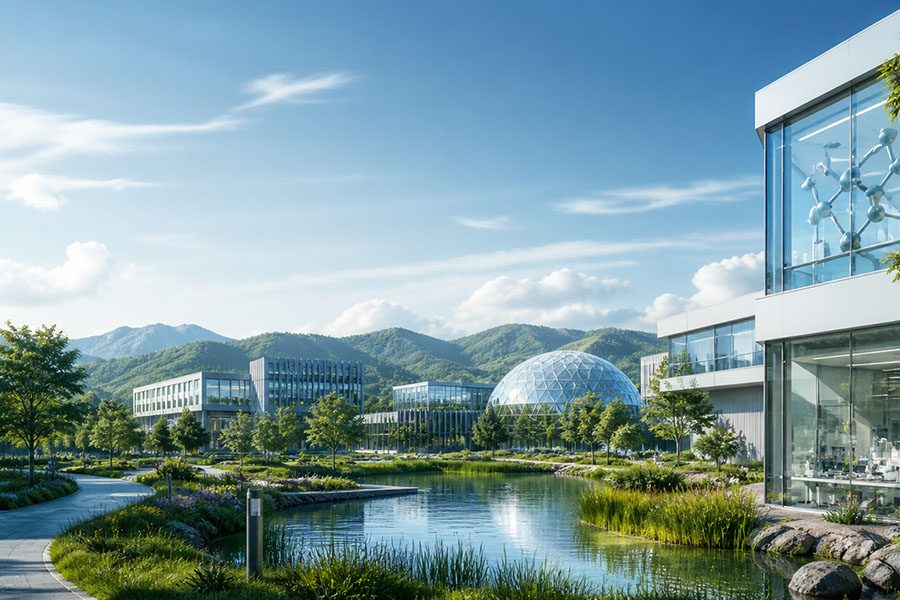
What began as collections of labs and office buildings “are now something far more dynamic,” Stewart said. Today’s parks are “connected, mixed-use environments, built to spark collaboration, move ideas to market faster and create tangible impact in their regions.”
That shift reflects a bigger change.
“It’s no longer about real estate. It’s about building ecosystems,” Stewart said. “The most effective science parks today are defined by the strength of their networks: access to capital, support for startups, partnerships with industry and a steady pipeline of talent. Success is showing up in outcomes — companies formed, technologies deployed and economic growth that is both visible and measurable.”
Research Parks and Innovation Districts See Growing Demand
The market for research parks and innovation districts is “definitely growing across the country,” and doing so beyond traditional hubs such as Silicon Valley and Boston, said Brian Darmody, chief strategy officer for the Association of University Research Parks.
The organization operates from its headquarters in Tech Parks Arizona and from Darmody’s base in the Washington, D.C., area office at the University of Maryland, College Park’s Innovation District.
That is Darmody’s macro observation. However, he noted that demand is softening for wet lab space in biotech research and development due to cyclical changes in that industry, especially in locations such as Boston and San Diego.
On the other hand, biomanufacturing is booming in places such as North Carolina and Indiana.
Kevin Byrne, CEO of The University Financing Foundation in Atlanta, echoed that point. He said he is “hearing of as many new developments around energy and defense, as I did around wet labs five years ago.”
“Places that focus on university-industry relations for commercial output will succeed,” Byrne said. “If it needs new facilities, additional space will be developed. There is some progress being made in those sectors already.”
Emerging Technologies Drive New R&D Park Opportunities
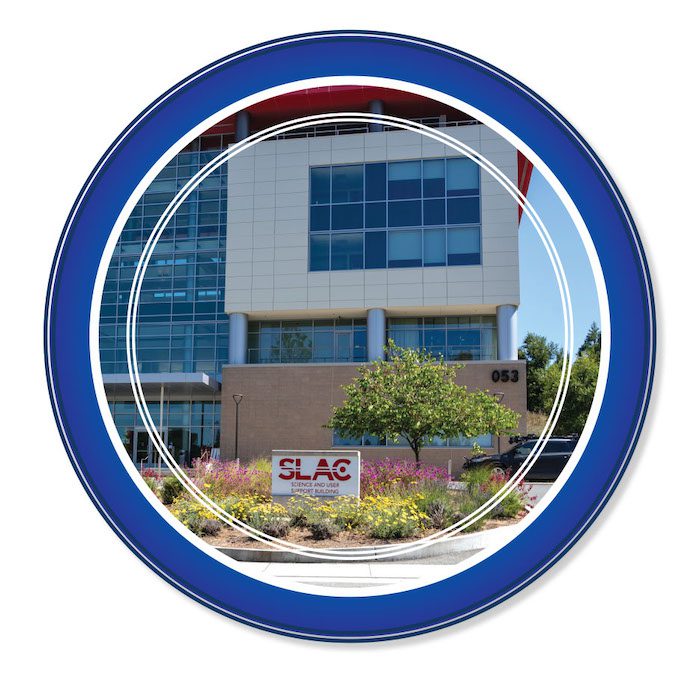
Darmody pointed out that other major technology advancements are rapidly making significant strides, notably the increased presence of quantum computing and quantum sensing in hubs such as College Park, Maryland; Chattanooga, Tennessee; New Haven, Connecticut; Chicago; and Denver.
In the wake of the recent success of Artemis II, Darmody also commented on space research, where interest is rising in Florida, Texas, Utah, Ohio, Huntsville, Alabama, and on the Maryland-Virginia border at Wallops Island, Virginia.
“These locations are taking advantage of the increasing interest in how on-the-ground facilities can support space technology in low Earth orbits with satellites,” Darmody said, “as well as more ambitious projects to the Moon and Mars. One of the best aspects of this trend is that you don’t need to have a robust site to launch rockets to take advantage of new opportunities for space technologies.”
Other sectors are progressing as well, including advanced manufacturing, which is being boosted by artificial intelligence and critical minerals activity. Energy storage and nuclear power companies, which will be critical in building data centers, are also among the sectors growing in today’s market.
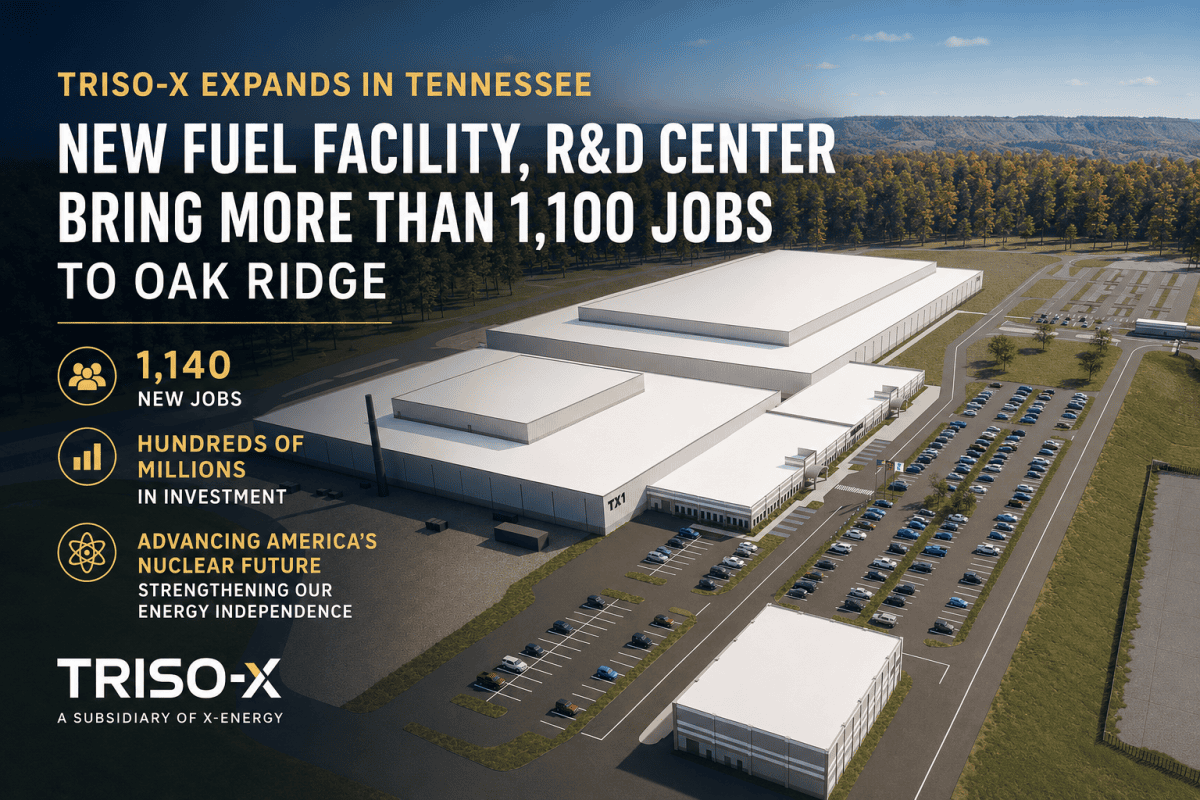
Darmody cited the example of X-energy, a nuclear reactor and fuel design technology company that is consolidating two suburban Washington offices into a new 125,000-square-foot headquarters in Gaithersburg, Maryland.
He also pointed to another potential upside in today’s market: Opportunity Zones 2.0, which provide federal tax incentives for investing in certain low-income geographic areas, especially rural parts of the country. Governors will have the ability to nominate new tracts starting July 1.
“Many universities across the country are in, or are adjacent to, opportunity zones,” Darmody said, “and anchor institutions with governors can help attract capital to their regions by ensuring their areas are nominated.”
Research Parks Become Essential Economic Development Infrastructure
Finding appropriate space for research parks is increasingly important, as they are becoming essential elements of successful economic development strategies.
“From a site selector’s perspective, research and innovation parks are no longer optional, they are essential infrastructure in today’s economic development ecosystem,” said Gray Swoope, president and CEO of Vision First Advisors in Tallahassee, Florida. “Communities competing for advanced industry projects, especially as AI reshapes the landscape, need to align research capacity with real-world application to reduce risk and accelerate timelines.”
For his example of a research park done right, Swoope pointed to North Carolina’s famed Research Triangle Park, also known as RTP.
RTP “remains a leading model,” he said. The park continues to grow while leveraging proximity to Duke University, the University of North Carolina at Chapel Hill, and North Carolina State University.
“Its evolution into a life sciences and biomanufacturing hub shows that a full research-to-production spectrum matters more than ever,” Swoope said.
Jordan Peterson, chief operating officer of Atlanta-based Collaborative Real Estate, agreed.
“The people who are focused on innovation districts as an investment have taken too narrow a view of it. The old model decades ago was an industrial park in a siloed environment,” Peterson said. “They may have been successful, but not necessarily because they were located there; there was no activity.”
What is needed, Peterson said, is something like RTP, which in recent years has expanded to include collaborative spaces and programming. That includes speaker groups and social events, such as brown bag lunches or musical performances.
“Getting people together from across the state can be difficult,” Peterson said, “but the best parks provide programming to get people together to — hopefully — exchange ideas.”
Innovation Districts Support the Full Research-to-Production Lifecycle
Exchanging ideas is critical because demand is rising nationally for integrated environments where engineering, design, prototyping, and manufacturing coexist, Swoope said.
The University of Iowa Pharmaceuticals illustrates this shift with a clear path from research and development through Food and Drug Administration production, supported by local talent and facilities.
Swoope also pointed to emerging markets such as San Antonio’s VelocityTX Innovation Center, which shows similar momentum by helping startups bridge early-stage production to scale.
In North Carolina, the state’s continued biopharma growth reinforces its status as a top-tier market.
Artificial intelligence is also fueling another wave of development, especially around Stanford Research Park and its technology ecosystem, Swoope said. California and Texas remain strong, while parts of the Southeast and Midwest gain traction with lower costs and ready sites.
While numerous locations across the United States have proven — or are proving — successful, talent remains a more complicated issue.
“Workforce alignment is now critical; companies want reliable, scalable talent pipelines,” Swoope said.
The ongoing challenge of securing ample investment remains as well, but some avenues are becoming more available.
“Although venture funding remains concentrated in a few hubs,” Swoope said, “innovative public-private partnerships are helping close gaps in emerging regions.”
Overall, Swoope observed that the market is active, but more disciplined.
Companies are pursuing fewer speculative moves and choosing locations that deliver across the full innovation-to-production lifecycle.
“Communities that adapt to this shift and market accordingly,” Swoope said, “will prevail.”

Case Study: Greater Washington’s Innovation Ecosystem
A theme of Swoope’s observations is connectivity, which can often be easier to achieve in a major market. While that connectivity is not always guaranteed, it is powerful when commerce, government, and education productively collide to create a healthy bottom line for all.
“Across the nation, innovation districts and R&D campuses have been central to how regions compete,” said Victor Hoskins, president and CEO of the Fairfax County Economic Development Authority in Tysons, Virginia. “You see it in places like Boston-Cambridge and North Carolina, where dense clusters of research institutions, capital and industry drive growth within defined geographies.”
However, Hoskins said what is taking shape in the Greater Washington, D.C., region is something different.
“Across Washington, Northern Virginia and Southern Maryland, you have interconnected clusters of high-growth sectors that function as one innovation ecosystem,” Hoskins said. “Federal research and mission-driven investment in Washington, a growing biopharma presence in Southern Maryland, and a rapidly scaling technology base in Northern Virginia are reinforcing one another in real time.”
That strength comes from a region that is home to more than 60 colleges and universities and a workforce of more than 3.3 million people.
“That depth of talent, combined with proximity to federal labs, partners and leading research institutions, is accelerating discovery and deployment across AI, cybersecurity, aerospace and dual-use technologies,” Hoskins said.
The result is “an interconnected system of talent, infrastructure and capital enabling innovation at a much larger scale,” he added.
“This has become a true competitive advantage for the Greater Washington region.”

No Silos: The Future of Science Parks Is Connected
Interconnection has become key to success, and Stewart stressed the importance of physical place when creating new technologies and bringing them to market.
“It remains a powerful differentiator,” she said. “Even in a highly connected digital world, geography, design and everyday experience influence whether people stay, collaborate and innovate together. Talent is choosing environments that are walkable, energized, and community-driven.”
In response, Stewart said, science parks are blending research space with housing, retail, and public gathering areas to create destinations where people genuinely want to spend time.
One example is bwtech@UMBC, where Director of Entrepreneurial Services Marjie Cota discussed how the narrative for R&D parks is shifting from isolated suburban campuses to integrated innovation neighborhoods.
“We’re embracing radical reciprocity — a strategy that transforms the park from a research outpost into a core civic partner,” Cota said. “Our approach centers on a multi-dimensional workforce pipeline designed to keep talent and wealth within Maryland through three distinct on-ramps: the Student-to-Startup Conduit, Strategic Ecosystem Synergy and the Next-Gen Talent Frontier.”
By prioritizing these connections, bwtech is not just creating a $700 million-plus economic impact, Cota said.
“We’re building a sustainable, multi-generational workforce that treats our community as a primary stakeholder in our shared future.”
Stewart also emphasized the importance of developing new technologies.
“It’s also driving a sharper focus. Areas like AI, biotech, quantum and climate solutions are shaping not just investment, but the physical and strategic design of these environments,” she said. “Regions are leaning into their unique capabilities and translating them into long-term advantage.”
While noting that innovation today “is not about proximity alone,” Stewart said it is about “connectivity, intentionality and outcomes.”
“The most successful science parks function as integrated ecosystems where talent, capital and ideas converge,” she said.
“So the science parks that thrive going forward will feel less like campuses,” Stewart said, “and more like living, connected innovation communities.”
About the Author
Mark R. Smith is based in Odenton, Maryland, and joined Expansion Solutions after writing about site selection among the many topics he has covered in the business universe.
That part of his career began in 1993 when he joined The Daily Record, a Baltimore business and legal publication, where he covered economic development, commercial real estate, and numerous other industries.
In 2003, he was named editor-in-chief of The Business Monthly, another Maryland publication that covers the business scene in the Baltimore-Washington Corridor counties.
Concurrently, he has written extensively about the film and video industry for a variety of publications, as well as about his other interests, including music, sports, and leisure.