Deepened Brownsville Ship Channel strengthens South Texas’ role in maritime trade, energy exports and global supply chains
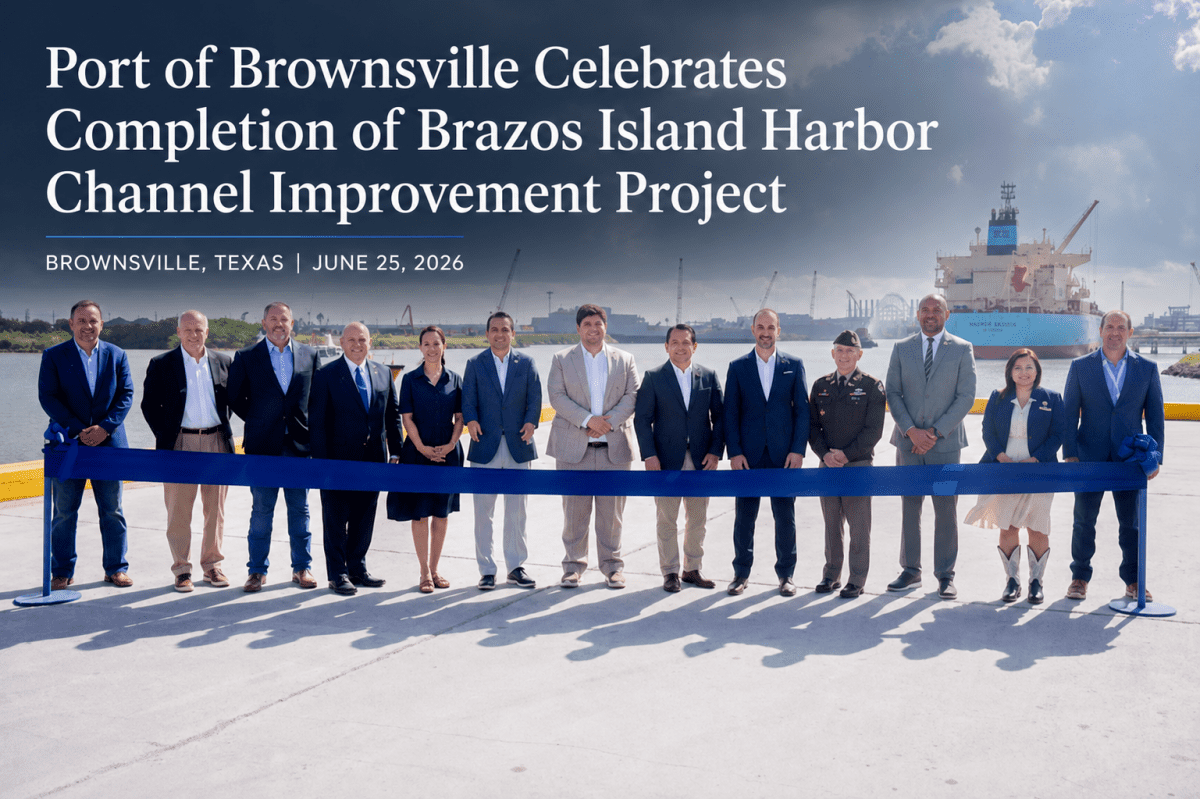
BROWNSVILLE, Texas — June 26, 2026 — The Port of Brownsville, the U.S. Army Corps of Engineers Galveston District, the Brownsville Navigation District and NextDecade have celebrated the completion of the Brazos Island Harbor Channel Improvement Project, a major infrastructure investment that deepens the Brownsville Ship Channel and strengthens the port’s position as a leading maritime gateway for South Texas.
A ribbon-cutting ceremony held June 25 at the Port of Brownsville marked the completion of the project, which deepened the Brownsville Ship Channel by an additional 10 feet. The improvement increases the entrance and jetty channels from 44 feet to 54 feet and the main channel from 42 feet to 52 feet.
The completed project places the Port of Brownsville among Texas’ deepest deep-draft ports and positions the Brownsville Ship Channel among the deepest navigation channels in the Gulf region. The deeper channel improves maritime access for larger vessels carrying heavier cargo, increases navigation safety, reduces transit times and strengthens South Texas’ role in the national maritime supply chain.
“Today’s completion is more than a navigation milestone — it’s a strategic investment in America’s economic strength,” said U.S. Army Brig. Gen. George H. Walter, U.S. Army Corps of Engineers Southwestern Division commander. “This deeper, safer federal channel expands our capacity for international trade, strengthens critical energy infrastructure and demonstrates how modern infrastructure can advance both economic security and U.S. energy dominance.”
The ceremony brought together federal, state and local leaders, along with project partners including Col. David W. Dake, commander of the USACE Galveston District; Sergio Tito Lopez, chairman of the Brownsville Navigation District; William Dietrich, port director and CEO of the Port of Brownsville; and Tarik Skeik, chief operating officer of NextDecade. U.S. Rep. Vicente Gonzalez, whose Texas 34th Congressional District includes the Port of Brownsville, also recognized the project’s completion and its importance to South Texas.
“I’m thrilled to have secured funding for this project through the Bipartisan Infrastructure Law and deliver a long-awaited investment for South Texas and the Rio Grande Valley,” Gonzalez said. “By connecting our communities more directly to global markets, we are creating opportunities for local workers and businesses while giving the region a stronger foundation for sustained economic growth.”
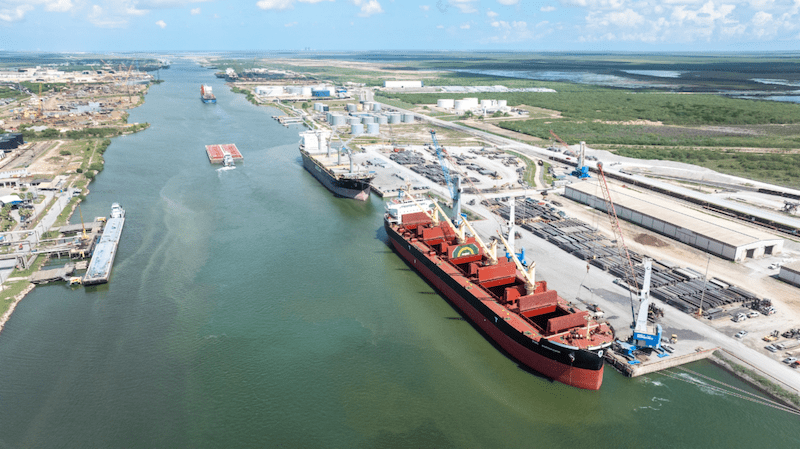
Designated in June 2019 as one of four nationwide USACE Public-Private Partnership pilot projects — and the only navigation project selected — the Brazos Island Harbor project demonstrates how federal, local and private partners can combine resources and expertise to accelerate the delivery of major public infrastructure.
“Completing this project reflects years of disciplined planning, engineering and construction by USACE, the Port of Brownsville, NextDecade and our many stakeholders,” Dake said. “The result is a safer, more capable navigation system that fulfills the federal mission, delivers lasting public value and strengthens a maritime gateway important to the nation’s economy and security.”
The project included channel deepening, dredging of berthing areas, improvements to dredged material placement areas and the installation of updated navigation aids. The Port of Brownsville is also expected to invest an additional $50 million in related landside port improvements.
For the Brownsville Navigation District, the project advances a long-term vision for the port and the broader region it serves.
“For generations, the Brownsville Ship Channel has connected our region to opportunity,” Lopez said. “This improvement gives the port the capacity to build on that legacy, pursue new industries and serve as an even stronger economic engine for South Texas. It also reflects the long-term vision and cooperation required to turn a major infrastructure goal into reality.”
The Port of Brownsville served as the project’s non-federal sponsor, while NextDecade participated as the private partner. Segment A dredging and improvements to Placement Areas 4A, 4B and 5A were privately funded. Segment B dredging and improvements to Placement Areas 5B and 7 were funded by USACE and the Port of Brownsville.
Segment A dredging began Aug. 12, 2024. USACE awarded the Segment B dredging contract on Aug. 6, 2024, and dredging began Nov. 30, 2024.
With construction complete, the deeper channel reduces operational limitations associated with the former channel depth and allows vessels to carry more cargo.
“The deeper channel changes what the Port of Brownsville can do operationally,” Dietrich said. “It increases our ability to accommodate larger, more fully loaded vessels, improve cargo efficiency and compete for maritime business that previously faced depth limitations.”
Beyond its operational benefits, the project strengthens a strategic maritime gateway near the U.S.-Mexico border. Improved vessel access and port efficiency support more reliable international trade flows and the movement of energy products, industrial materials and other critical cargo.
“This milestone demonstrates the value of pairing public infrastructure leadership with committed private investment,” Skeik said. “The improved channel supports the development and long-term operation of Rio Grande LNG and major energy infrastructure, strengthens U.S. liquefied natural gas export capability and the Rio Grande Valley’s role in the global energy market.”
The project is authorized under Section 1401(1) of the Water Infrastructure Improvements for the Nation Act of 2016, Public Law 114-322. Its total estimated cost under traditional delivery methodology is approximately $295.2 million.
The USACE Galveston District maintains more than 1,000 miles of federally authorized navigation channels along the Texas coast, including approximately 270 miles of deep-draft channels and 750 miles of shallow-draft waterways.
For more information about the Brazos Island Harbor Channel Improvement Project, visit the U.S. Army Corps of Engineers Galveston District project page.
About the Port of Brownsville
The Port of Brownsville is the only deep-water seaport directly on the U.S.-Mexico border and encompasses 40,000 acres, making it the largest land-owning public port authority in the United States.
The port transships more steel into Mexico than any other U.S. port and is home to major energy, shipbuilding and ship recycling industries. It ranks No. 41 among the Top 150 U.S. maritime ports for waterborne cargo, according to the U.S. Army Corps of Engineers.
As the major multimodal transportation hub serving the Rio Grande Valley and northern Mexico, the Port of Brownsville supports investment, trade and job creation. Activity at the port contributes more than $1 billion to the Rio Grande Valley regional economy, more than $12 billion to the Texas economy and supports more than 100,000 jobs statewide.
For more information, visit portofbrownsville.com.