
When assessing trends in the tourism industry, it must be noted that 2026 is presenting some interesting avenues to explore off the usual path: for starters, the U.S.A. is celebrating its 250th anniversary and World Cup matches were held in 11 U.S. cities, including the final at MetLife Stadium in mid-July at New Jersey’s Meadowlands.
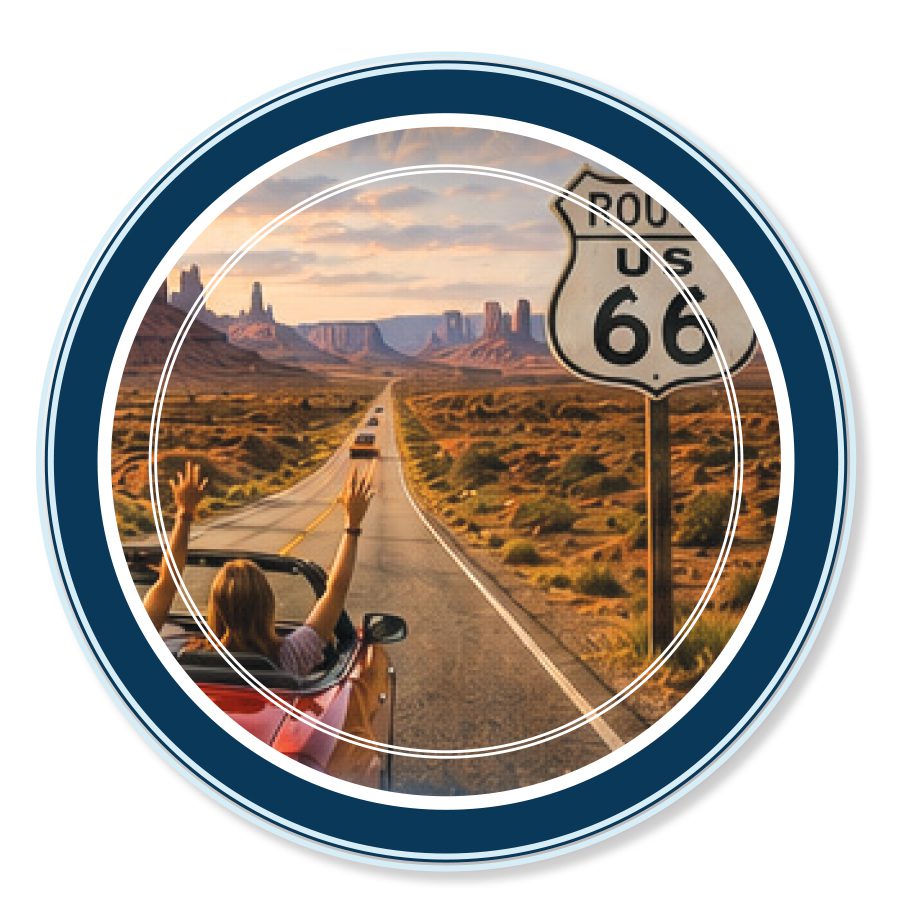
To boot, tourists, regionnaires, and even locals celebrating those events might tool along one of the country’s most celebrated highways, Route 66, to reach their destination―and discover even more sites on the 100th anniversary of “The Main Street of America.”
From the perspective of Aixa Diaz, spokesperson for AAA at its Washington, D.C., headquarters, despite the issues of the day, those events have done nothing but elevate the hot tourism industry. AAA projected a record-breaking 72.2 million Americans traveled during the July 4th weekend, besting last year’s record of 71.8 million travelers; most took to the road, with 61.4 million people moving about by car.
And despite the increased expense, air travel also reached a new record, with 5.8 million travelers flying domestically, while another nearly 4.9 million people traveled by bus, train or ship, driven in part by steady demand for cruising.
“Higher costs have put a bit of a damper on the industry, especially with the cost of plane tickets and various experiences,” said Diaz. “but people still want the special time with family and friends. What we’re mainly seeing are holiday periods that we can frame as snapshots, as we continue to see record numbers.”
Hat Trick
But how can that be, despite the war with Iran, inflation, high gas prices, energy costs and other societal ills? It’s about travelers “making modifications for different lengths of time, and maybe spending a long weekend at a destination, maybe at more than one destination,” Diaz said. “Fewer, shorter trips make it easier to budget.”
This year, those big three events are spurring great activity, as well as spurring ripple effects in many, many places, “such as those World Cup host cities and their dozens of base camp cities,” she said. “They’re hosting certain countries, so that leads to activity between the games.”
That’s part of what’s making 2026 about the Great American Road Trip.
“You have higher gas prices due to the war and inflation, but nine of 10 travelers are still going anyway,” said Diaz, and “only seven-eight percent or travelers are cancelling road trips. Reallocating resources and maybe fewer souvenirs mean closer-to-home, regional drive markets are doing very well, as opposed to flying.”
That said, “The airlines reduced capacity somewhat,” she said, “and have sold out most of their flights.”
Travel, said Diaz, “is seen as a need more than a want, and that means people will make other lifestyle choices and stay focused on value. They want the most bang for their buck. They’re selling out special deals and promotions nights.”
On that note, she added that “even though it looks like the war in Iran is coming to an end and fuel prices are dropping for cars and jet fuel, airfares are still 20 percent higher” than they were last year. “Big airlines don’t hedge on their fuel purchases long term like they used to, so they are paying for fuel.”
That basically optimistic overview was underscored by recent numbers from the Washington-based U.S. Travel Association. Joshua Friedlander, vice president, research for the USTA, stated that while “Domestic travel activity softened slightly in May and early June, but the broader picture remains one of stability” during “one of the most consequential summers in recent memory.”
“TSA passenger throughput declined 0.7 percent in May—the first monthly decline of 2026—and Memorial Day air travel was down approximately one percent compared with the same holiday period last year,” said Friedlander. “Even so, passenger volumes remain ahead of last year’s record pace, up 0.6 percent year to date.”
That, despite today’s aforementioned pressures. “Despite these challenges,” he said, “most travel indicators continue to perform at or above year-ago levels.”
Top Markets
While there is no doubt that the World Cup has had a high impact on the industry, said John Boyd, principal of The Boyd Company, Boca Raton, Fla., there is still some disappointment within this most timely windfall.
“Most of the 11 cities that are hosting are not meeting some of the early expectations in regards to hotel occupancy, but those that are include Miami, Los Angeles, Dallas and New York/New Jersey. But that said,” said Boyd, “all 11 are still getting enormous crowds, some just not from hotel metrics, which are also affected by Airbnb and room sharing options that dent the market.”
Part of the reason for the success is that the World Cup “is a platform for business deal-making all over the world,” he said, “much of the economic impact won’t be measurable until years from now.”

That’s because, “Tourism comes down to connectivity,” said Boyd, “and it’s the global hospitality infrastructure, combined with the sports industry economy, that serves the business ecosystem in those powerhouse sports markets.”
Other issues in today’s generally productive market are inflation and even the strong U.S. dollar―which is great domestically, but increases expense for global travelers to come here and spend money―and the ongoing geopolitical and visa concerns.
But those problems are not as impactful in certain markets as in others. “One reason Dallas and Miami outperform other markets is that they have more affluent global business travelers, thus fewer travel and visa obstacles with Immigration and Customs Enforcement (or ICE). Plus, the World Cup is more difficult to for businesses to promote as opposed to other sporting events because they don’t know what team will be playing in their cities, so they don’t have much time” to plan ahead.
That’s part of why the event was big in “band camp” cities, which are non-host locales like Las Vegas, New Orleans and Atlantic City, that Boyd called “some of the biggest” of the spectacle, simply on the heels of watch parties, branded events and even various functions at training facilities.
Pandemic Effect
Scanning the bigger picture was Amir Eylon, president & CEO of Longwoods International, Columbus, Ohio, who said that today’s tourism market performance is still partially due to Americans who haven’t forgotten being cooped up for most of 2020 and some of 2021, too.
“Americans are traveling in record numbers since COVID-19,” said Eylon, “but now they’re spending a little less on their trips because coming out of the pandemic, they had stimulus checks and had often saved money during the shutdown.”
That’s what the tourism industry is experiencing during what he termed today’s “K-shaped” economy: “The wealthier folks are not hindered by rising costs and are spending like there’s no tomorrow, but those on a budget are spending less,” he said. “They may cancel overnight trips, and instead take day trips and pack sandwiches. So, we’re seeing both sides of the coin.”
The many travelers who don’t mind bringing a boxed lunch are also often found “in destinations that do not have high points of entry,” said Eylon, “such as national parks, state parks and other locations with low (or no) entry fees; or two-for-one specials, like waterparks, and local and/or regional draws like museums, sports experiences, etc. Those locations are doing gangbusters this year.”

Bigger Picture
The special events of 2026 and the reverberations of their impact made Karyl Leigh Barnes, president, tourism practice, for New York-based DCI, reflective of the possibilities for the industry.
Barnes said the current market has presented “a real opportunity for communities to better leverage tourism offices and their unique role in building awareness of place,” said Barnes. “Tourism organizations are uniquely positioned to tell a broader story about a community, one that goes beyond travel to spotlight the outdoors, culinary culture, local entrepreneurs, small businesses and economic evolution.”
“In many communities, no one is consistently playing that role,” she said. “There is often a gap, particularly when it comes to business storytelling.”
However, the expertise already exists within the tourism office to tell stories. “The opportunity is,” said Barnes, “for communities to empower, and fund, those teams to expand the breadth and reach of their storytelling.”
How? “Earned media is one of the most powerful ways to do that. Strategic editorial placements and social media marketing can build awareness, drive visitation and contribute to visitor spending,” she said, “but the impact goes well beyond ‘heads-in-beds.’”
Effective tourism messaging drives the kind of visitation “that supports local communities, creates jobs and shines a spotlight on the businesses that make a destination distinctive,” Barnes said. “When travelers understand the stories behind local companies, restaurants, makers and experiences, they’re more likely to spend thoughtfully, helping communities capture greater value from every visitor.”
Over time, that same sharing of stories can also inspire future investment, strengthen civic pride and attract talent to fill open jobs. “That is the power of a destination brand. It shapes overall consumer perception of a place,” she said, “not just traveler perception.”
The Forecast
As for rest of 2026, Eylon expressed cautious optimism. “If oil prices keep dropping, and then airfares, barring any major calamities in the geopolitical or security enforcement arenas, I think we’ll see another record year for visitor volume for many markets.”
Diaz expressed a similar view, while pointing to a part of the market that’s been, and she feels will continue to be, a prominent part of boosting the industry’s bottom line.
“Cruises have spiked post-COVID-19,” she said, “which is good if you’re on a budget and want to see multiple places. They also offer the option of paying just once for the whole vacation, thus getting the financial part of the equation out of the way at the onset.”
And once they go on a cruise, said Diaz, those travelers “are 90 percent more likely to do it again. Alaska is big in the summer and early fall, as is the Caribbean in the fall, after hurricane season.”

While she’s still concerned that some vacationers “may pull back more during the shoulder periods like early fall, when people don’t want to take their kids out of school, that’s still a great time for the market,” she said, “notably October. That’s when prices drop, the crowds aren’t as big and the weather improves.”
But the overall point, especially this year, is that travel doesn’t need to be expensive. “Vacationers and day trippers can drive two hours, bring some groceries and stay a couple of nights,” she said.
Traveling “isn’t all about exotic flights. All one needs to do is drive at least 50 miles from where they live. Twenty percent of the population is in this faithful group that travels during the summer holiday weekends,” Diaz said, “which means most people don’t.”

“So,” she said, “Just stay local. Go to a BBQ or a parade. The core people hit the beach, a theme park or take that cruise. It’s about the experience bringing them joy. And they make it happen.”
About the Author
Odenton, Maryland-based Mark R. Smith joined Expansion Solutions after having written about site selection among the vast number of topics he has covered in the business universe. That part of his career began in 1993 when he joined The Daily Record, a Baltimore business and legal publication, where he delved into the worlds of economic development and commercial real estate, among numerous other industries; in 2003, he was named editor-in-chief of The Business Monthly, another Maryland publication that covers the scene in the Baltimore-Washington Corridor counties.
Concurrently, he’s written at length about the film and video industry for a variety of publications, and about his other loves, including music, sports and leisure.