

Strategic investments, advanced talent, and coordinated industry support are driving the state’s next era of defense growth
As global security priorities shift and aerospace technologies evolve at unprecedented speed, defense and aerospace companies are reassessing where innovation, manufacturing, and mission readiness can best align. Increasing geopolitical complexity, rapid advancements in autonomous systems, and the growing importance of resilient domestic supply chains are reshaping how companies select locations for investment and expansion.
In this environment, states competing for defense and aerospace investment must deliver far more than competitive incentives. Companies now require integrated ecosystems in which workforce talent, research institutions, testing infrastructure, and government partnerships coordinate to accelerate innovation and deployment.
Michigan is emerging as one of the nation’s most comprehensive environments for defense and aerospace growth, combining deep industrial expertise, advanced engineering talent, and coordinated public-private partnerships designed to support both established contractors and emerging technology firms.
At the center of this effort is the Michigan Economic Development Corporation (MEDC) and the state’s Office of Defense and Aerospace Innovation (ODAI), a strategic initiative created in 2024 to strengthen Michigan’s role in national defense while helping companies navigate federal opportunities and scale operations more efficiently.
A Coordinated Approach to Defense Industry Growth
ODAI represents a significant step toward aligning Michigan’s economic development strategy with national defense priorities. Rather than requiring companies to navigate multiple agencies and programs independently, the office functions as a centralized gateway connecting businesses with resources across state government, academia, and industry partners.
The office provides targeted business support services, including:
• Proposal and grant writing assistance
• Bid targeting and contracting support
• Cybersecurity grant programs
• Connections to federal defense opportunities
• Supply chain integration assistance
These services are increasingly critical as federal contracting grows more complex and competitive. For small and mid-sized firms, navigating procurement systems can present a significant barrier to entry. Michigan’s coordinated support model helps companies accelerate participation in defense programs while reducing administrative friction.
The state’s defense ecosystem already includes nearly 5,000 businesses supporting defense, aerospace, and homeland security industries. This broad supply base enables companies relocating to Michigan to quickly establish supplier relationships and integrate into existing production networks, reducing ramp-up timelines and operational risk.
Talent and Engineering Strength at National Scale
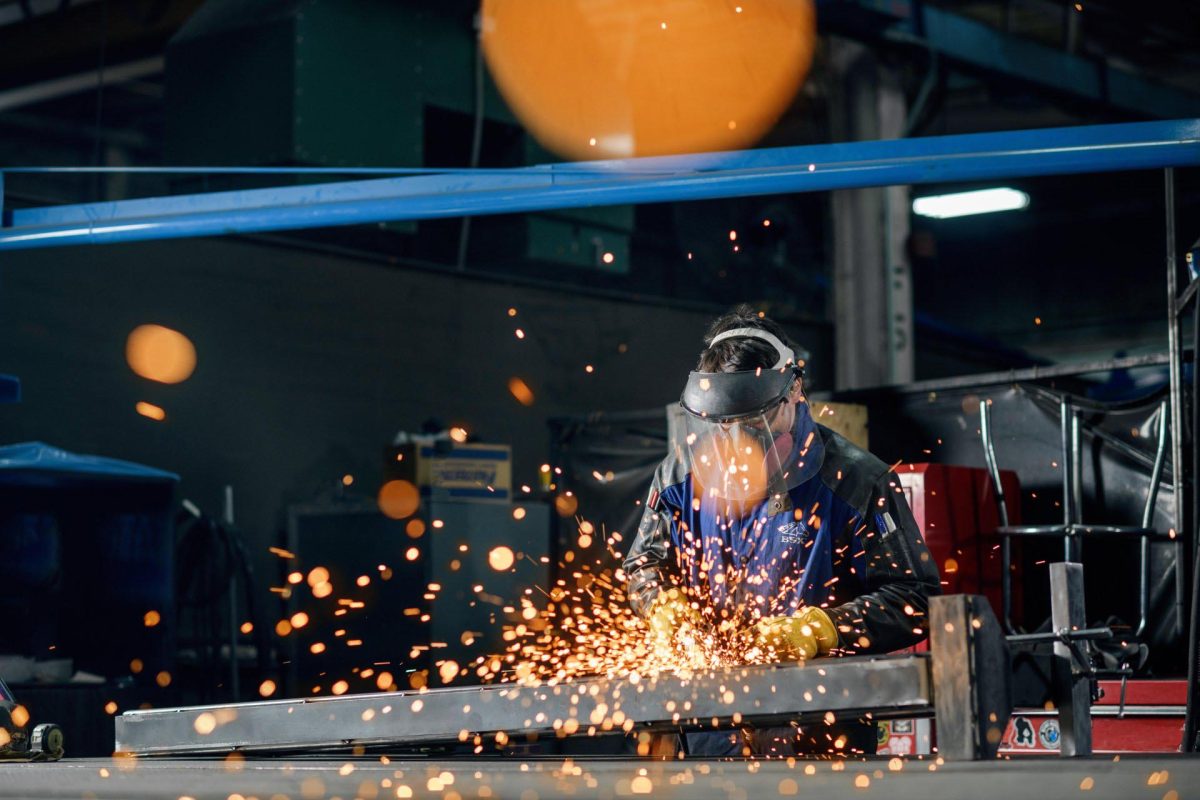
Workforce availability remains one of the most decisive factors in site selection for advanced manufacturing and aerospace companies. Michigan’s long-standing leadership in engineering and industrial production continues to serve as a foundational advantage.
The state is home to:
• 69,800+ advanced manufacturing professionals
• The highest concentration of mechanical and electrical engineers in the nation
• Extensive university research capabilities and commercialization programs
This talent base is supported by a higher education network deeply aligned with industry needs, including engineering programs, applied research initiatives, and workforce training partnerships designed to respond quickly to emerging technologies.
Across Michigan, 20 SmartZones provide turnkey environments for research, prototyping, and startup incubation. These innovation districts connect entrepreneurs, defense contractors, and academic researchers, allowing ideas to move more rapidly from concept to commercialization.
Companies operating in Michigan also benefit from access to university laboratories and technology commercialization support through the Michigan Small Business Development Center. These connections help firms accelerate product validation and refine prototypes, providing a direct bridge to scalable manufacturing operations that serve as a critical advantage in fast-moving defense technology sectors.
Building the Future of Aerospace Innovation
Michigan’s defense strategy extends beyond traditional manufacturing into next-generation aerospace and autonomous systems development. The state has made targeted investments to position itself as a national leader in emerging mobility technologies and uncrewed systems.
Advanced Air Mobility Leadership
Through its Advanced Air Mobility (AAM) Initiative, Michigan is building infrastructure and regulatory frameworks to support electric vertical takeoff and landing aircraft, autonomous aviation platforms, and future mobility systems. The initiative brings together industry partners, universities, and public agencies to create real-world testing environments and commercialization pathways.
By fostering collaboration between aerospace developers and mobility innovators, Michigan is helping accelerate the adoption of technologies expected to transform both civilian and defense aviation.
Uncrewed Systems Innovation
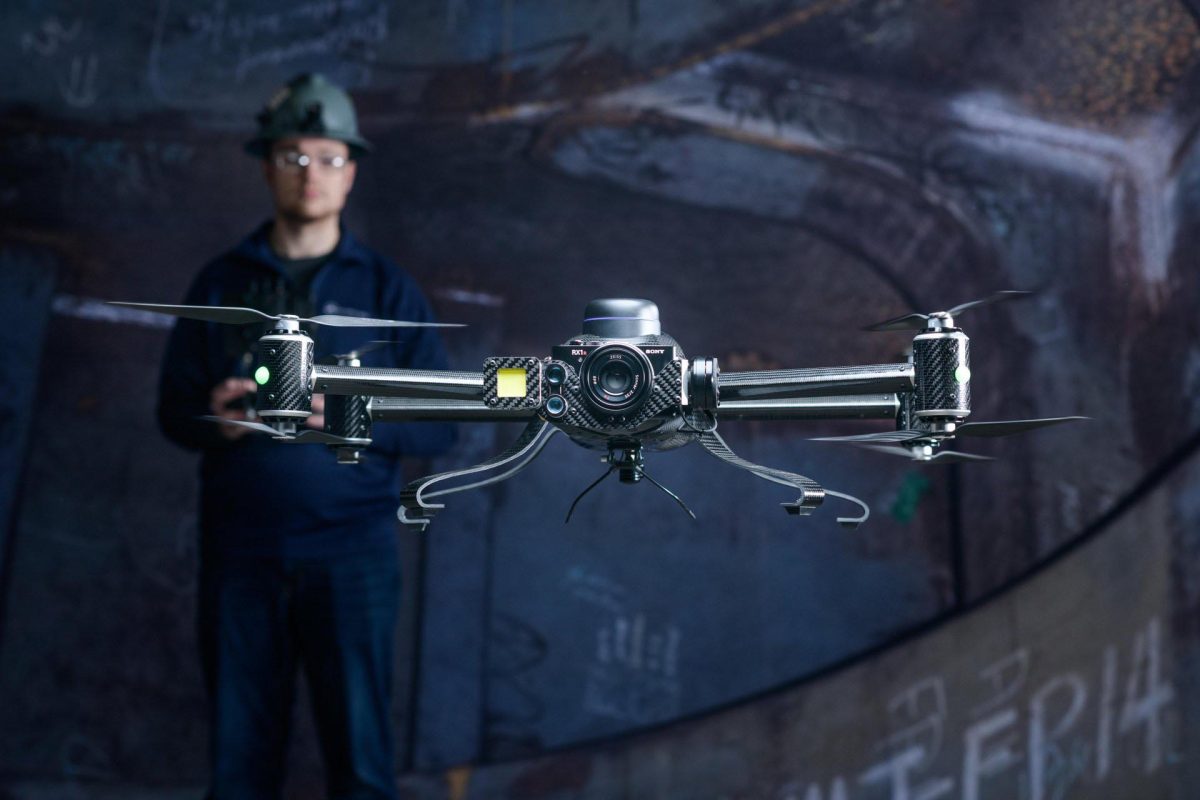
Michigan’s Uncrewed Triple Challenge highlights the state’s commitment to advancing autonomous technologies across air, land, and maritime domains.
These collaborative challenges encourage innovation by connecting startups, defense contractors, and research institutions to solve real operational problems. The most recent challenge focused on advancing autonomous defense capabilities, inviting participants to develop and test technologies such as unmanned aerial and ground systems, AI-enabled navigation, and mission-support autonomy designed to operate in complex military environments.
Autonomous systems are rapidly becoming central to defense strategy, and Michigan’s early investment in testing and development environments positions the state at the forefront of this technological shift.
Infrastructure for Innovation
The state is also leveraging National Guard assets through its Infrastructure for Innovation agreements, enabling companies to test technologies in operationally relevant environments. Access to real-world testing conditions allows companies to validate performance faster while strengthening collaboration between military users and private-sector developers.
National Defense Collaboration and Testing Assets
Michigan’s competitive advantage is further strengthened by unique military and innovation assets that support cross-domain experimentation and collaboration.
Key initiatives include the National All-Domain Warfighting Center and the Kelly Johnson Joint All-Domain Innovation Center, both designed to facilitate cooperation among defense agencies, industry partners, and research institutions. These centers support experimentation across air, land, cyber, and space domains to ensure Michigan’s defense infrastructure remains aligned with the evolving nature of modern military operations.
The Advanced Aerial Innovation Region at Michigan Central adds another layer to the ecosystem, bringing together mobility companies, technology startups, and research organizations focused on next-generation aerial systems.
Together, these assets create an environment where companies can design, test, refine, and deploy technologies within a single regional ecosystem, significantly reducing development timelines.
Investment Momentum Demonstrates Market Confidence
Michigan’s strategy is already producing measurable results, with recent investments demonstrating strong industry confidence in the state’s defense and aerospace ecosystem.
Notable projects include:
• A new F-15EX fighter jet mission at Selfridge Air National Guard Base, reinforcing Michigan’s strategic military importance
• Saab’s new manufacturing facility in Grayling Township
• American Rheinmetall’s $31.7 million expansion, strengthening combat vehicle production capabilities
• Veptos relocating operations from Texas to Michigan
• Eccalon establishing headquarters in Detroit, contributing to significant job creation and investment
These investments reflect broader reshoring trends as defense contractors seek locations capable of supporting secure supply chains, advanced production, and long-term workforce stability.
Each project also strengthens Michigan’s supplier ecosystem, creating multiplier effects across local businesses, research institutions, and workforce pipelines.
A Competitive Advantage for Defense and Aerospace Companies
Michigan’s approach integrates its historic manufacturing strengths with a forward-looking innovation strategy. Rather than treating defense investment as a standalone industry, the state has built an interconnected ecosystem linking mobility innovation, advanced manufacturing, engineering talent, and military collaboration.
For companies navigating rapid technological change and evolving national security demands, this integrated model provides both operational efficiency and long-term scalability.
Michigan offers companies access not only to talent and infrastructure but to a collaborative environment where public and private partners share a common objective: accelerating innovation while strengthening national security capabilities.
As defense modernization continues and aerospace technologies advance, Michigan is positioning itself as a destination where companies can move from research to production and from innovation to deployment more quickly and effectively.
With continued investment, expanding partnerships, and a coordinated statewide strategy, Michigan is helping shape the future of America’s defense and aerospace industries, ensuring that innovation, manufacturing excellence, and mission readiness remain closely aligned.
Learn more about Michigan’s defense and aerospace ecosystem at michiganbusiness.org/defense.