Inland Ports Become Essential Links in Modern Supply Chains
Inland ports, first known as “dry ports” and originally conceived to ease congestion at the nation’s container ports, have evolved into critical market gateways. Today, they serve as key links in a growing number of corporate supply chains.
Major companies such as Walmart, BMW, Costco, IKEA, Home Depot, Tyson Foods, Lowe’s, and Amazon — along with countless smaller companies across a variety of industries — utilize rail-served, strategically located inland ports to improve the flow of goods moving through container terminals, strengthen distribution networks, reduce transportation costs, and operate more efficiently.
According to Dublin, Ireland-based Research and Markets, the growth in the number of inland container ports “is driven by expanding global trade and the accelerating demands of e-commerce, which require efficient inland freight handling and logistics support.”
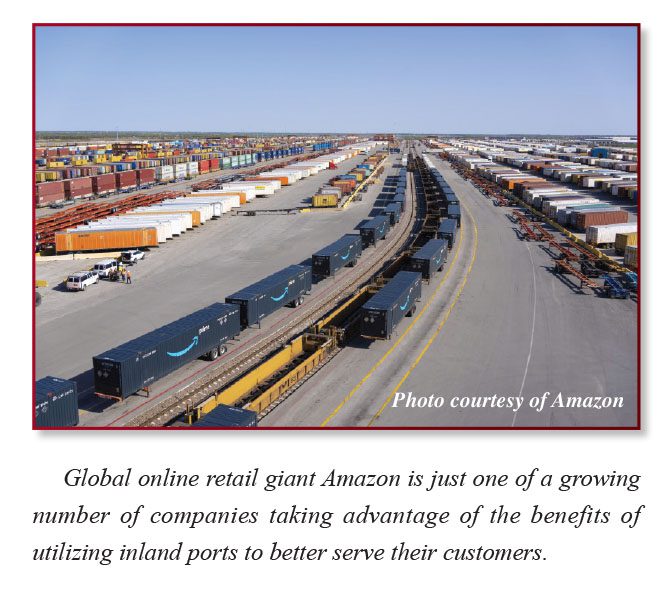
“Their role in last-mile delivery and regional logistics optimization makes them vital assets for modern supply chains adapting to both bulk cargo needs and time-sensitive consumer goods,” the industry researcher says.
Port congestion and limited land available for expansion have led to increased demand for inland facilities. These sites allow for off-site storage and transloading, the consolidation of import and distribution functions in one location, and the movement of goods to interior points by rail or highway.
Examples of this growing inland port network abound across the United States.
Georgia Ports Authority Expands Inland Port Network
The Georgia Ports Authority’s new 104-acre Gainesville Inland Port, formerly known as the Blue Ridge Connector, is expected to become operational this spring.
Served by 14 rubber-tired gantry cranes, the facility will have a maximum throughput capacity of 200,000 containers annually and the ability to store and operate 18,000 feet of rail cars.
Built to serve approximately 330 manufacturers in Northeast Georgia, the Gainesville Inland Port will link the region with the Port of Savannah’s 36 weekly global containership services. Norfolk Southern Railroad will provide five-day-a-week service to and from the facility.
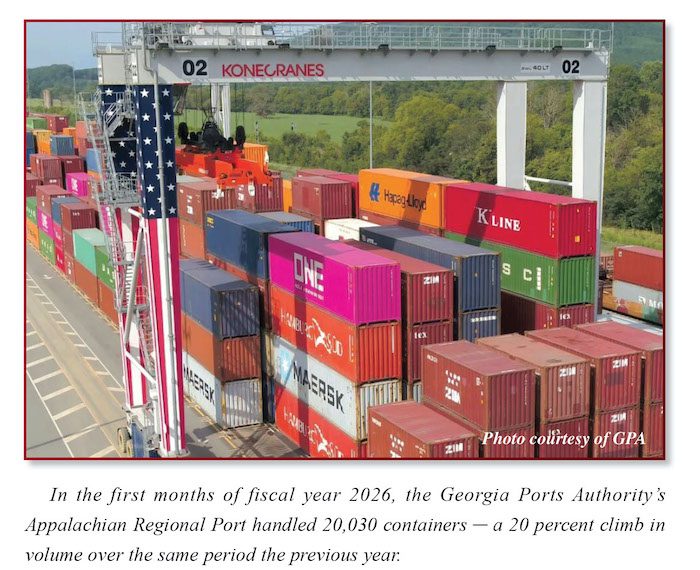
The GPA’s Appalachian Regional Port handled 41,000 containers during fiscal year 2025, which ended June 30, 2025. During the first months of fiscal year 2026, the Appalachian Regional Port handled 20,030 containers, up 20 percent from the same period a year ago.
Located near Chatsworth, about an hour and a half north of Atlanta, the Appalachian Regional Port offers seven-day-a-week service from the Port of Savannah. CSX provides service on a direct 388-mile rail route to and from GPA’s Garden City Terminal.
In addition to the Appalachian Regional Port and Gainesville Inland Port, the Georgia Ports Authority also owns and operates the Bainbridge Inland Port, a bulk cargo facility located on the Apalachicola-Chattahoochee-Flint Waterway, also known as the Tri-Rivers System.
Over the long term, the GPA has reportedly targeted western Georgia for the site of its next inland rail facility.
Carolina Connector Links Savannah to North Carolina
The Carolina Connector rail facility, known as CCX, offers exclusive CSX service with a direct connection linking the Port of Savannah with northeastern North Carolina.
The facility offers capacity for 150,000 containers per year and provides easy access to Interstate 95 and the Raleigh-Durham area.
In North Carolina, importers and exporters can access a faster supply chain through a direct rail connection between Savannah and Rocky Mount via the CSX Carolina Connector intermodal terminal.
The service provides seven-day-a-week CSX rail departures from Savannah, with a three-day transit time from vessel to cargo arrival.
Nebraska International Port of the Plains Begins Commercial Transloading
In January, the Nebraska International Port of the Plains Board of Directors announced that the Hershey Rail Park was ready to begin commercial transloading after the port received key handling equipment.
The port has taken delivery of a car mover, two transloaders, and a scale. This equipment gives the facility the ability to move rail cars and facilitate loading and unloading operations.
Northwest Seaport Alliance Plans Inland Logistics Hub in Washington
The Northwest Seaport Alliance joined the Port of Benton, Port of Pasco, and Port of Walla Walla in signing an agreement to develop an inland logistics hub in the Tri-Cities region of southeastern Washington.
The envisioned, as-yet-unnamed hub “will leverage existing regional assets, including available industrial-zoned land and access to Class I railroads and major highways with direct connections to the coastal seaport,” the Northwest Seaport Alliance says.
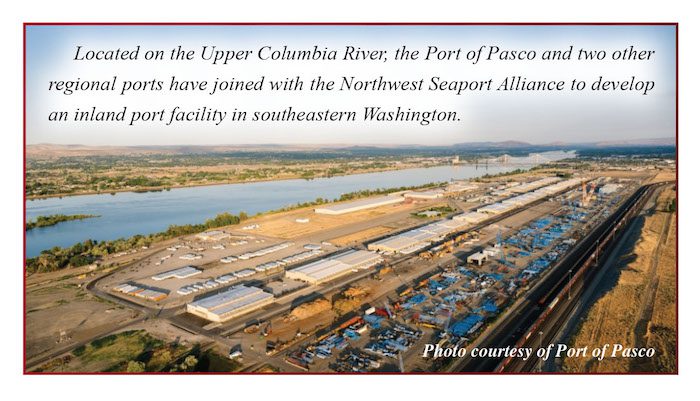
“The hub will also support the development of new logistics capabilities, including intermodal transfer operations, distribution and warehousing facilities and barge facilities with access to the Columbia-Snake River system,” the alliance adds.
The agreement focuses on joint planning and coordinated marketing efforts to attract investment from international trade customers and companies. It also includes alignment on land-use and transportation planning and collaborative pursuit of funding opportunities.
The effort seeks to build on the success of the current rail service connection offered by Tri-Cities Intermodal, which launched in 2024.
The ports view an inland logistics hub as “a vehicle to drive increased economic development and job creation across urban and rural Washington communities, improve export access for eastern Washington agricultural and industrial products, and attract new businesses involved in global trade to the state.”
Port of Nevada Advances Rail-Served Inland Port Development
Located 25 minutes from Reno and Foreign-Trade Zone-ready, the 224-acre Port of Nevada inland port includes a full-service intermodal and rail facility.
The facility offers switching, potential 24/7 transloading, chassis service, storage of multiple commodities — including liquids, dry bulk, and dimensional materials — an onsite truck scale, and other rail infrastructure.
The facility is served by two Class I railroads, Union Pacific and BNSF, with connections to an east-to-west Class I freight rail mainline and existing direct spurs with scheduled six-day-per-week rail service.
With 7,000 feet of linear track, double-stack container service is directly available to on-dock port locations by Union Pacific, which connects directly with the Port of Oakland.
Significant progress has been made in the construction of a new 238,680-square-foot industrial building, with the space slated for occupancy in the fall of this year.
The new building sits along U.S. Highway 50 and will feature 25 loading docks, four drive-in ramps, 104 trailer stalls, and 143 parking spots.
Gateway Rail Industrial Park Planned Near Laredo, Texas
Kraus Development, a leading land and commercial developer in Laredo, Texas, recently partnered with Ironhorse Resources to develop the 2,000-acre master-planned Gateway Rail Industrial Park north of Laredo.
According to Ironhorse Resources, the planned facility “aims to enhance the region’s truck to rail logistics, providing seamless rail connectivity between Mexican and U.S. markets. The project will support global trade and U.S. distribution and manufacturing through Laredo.”
The park’s location on Union Pacific’s mainline at the intersection of Texas Highway 255 and Interstate 35 “offers build-to-suit opportunities, industrial-ready infrastructure, and flexible lot sizes with scalable options that grow with the customer’s operation,” the company says.
South Carolina Ports Strengthens Inland Port Capacity
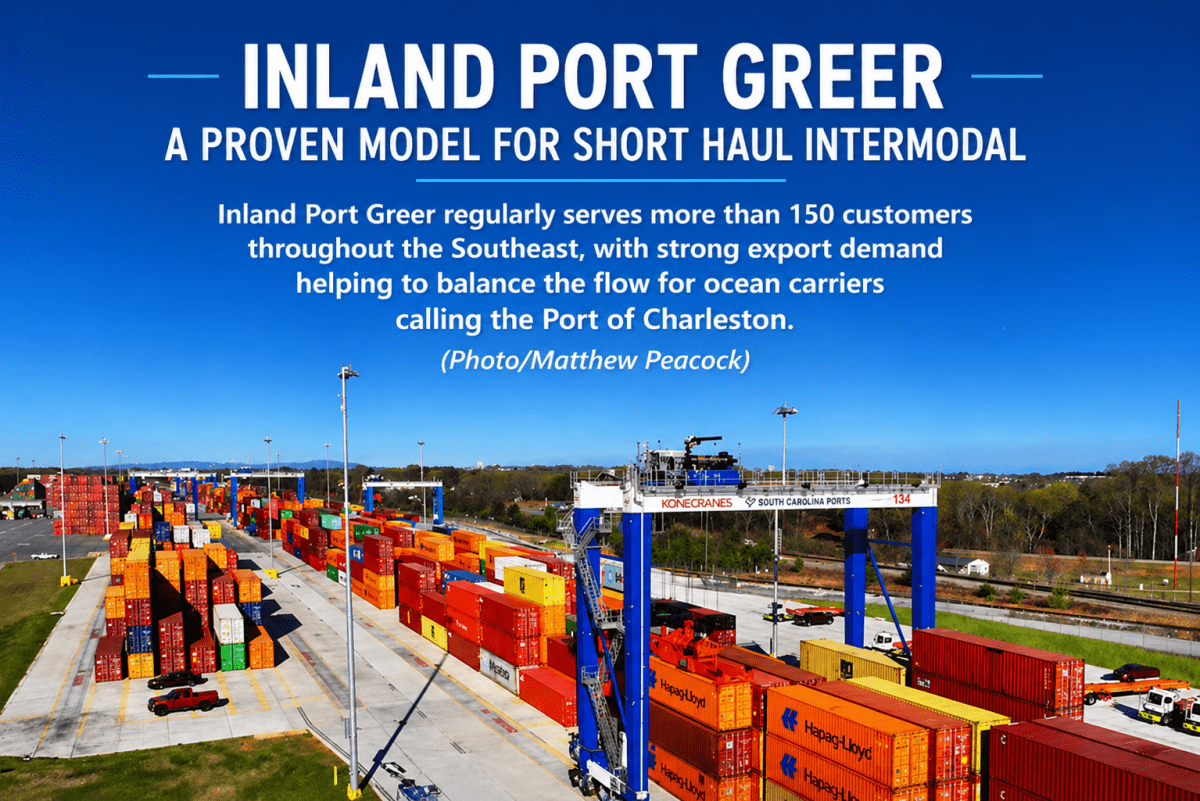
South Carolina Ports owns and operates the Port of Charleston’s marine container terminals and two rail-served inland ports: Inland Port Greer and Inland Port Dillon.
CSX and Norfolk Southern both serve the Port of Charleston. CSX provides rail service to Inland Port Dillon, while Norfolk Southern serves Inland Port Greer.
Last year, South Carolina Ports announced completion of a $55 million expansion project at Inland Port Greer, “strengthening the port’s statewide intermodal capabilities and connectivity from the Port of Charleston to inland markets.”
Upgrades include an expanded container yard to increase cargo capacity by 50 percent, 9,000 feet of additional rail to quickly handle longer trains, an expanded chassis lot, and new terminal operations and maintenance buildings.
With these enhancements, Inland Port Greer can handle 300,000 rail lifts annually and meet projected customer demand through 2040, according to South Carolina Ports.
Inland Port Dillon completed more than 48,000 rail containers in 2025, the busiest calendar year for the port and a 33 percent increase from 2024.
Alabama and CSX Break Ground on Montgomery Inland Port
The Alabama Port Authority and CSX officially broke ground in March 2025 on the new Montgomery Inland Port.
The $94 million inland port project will develop a 272-acre site near Interstate 85 and U.S. Highway 31 in Montgomery.
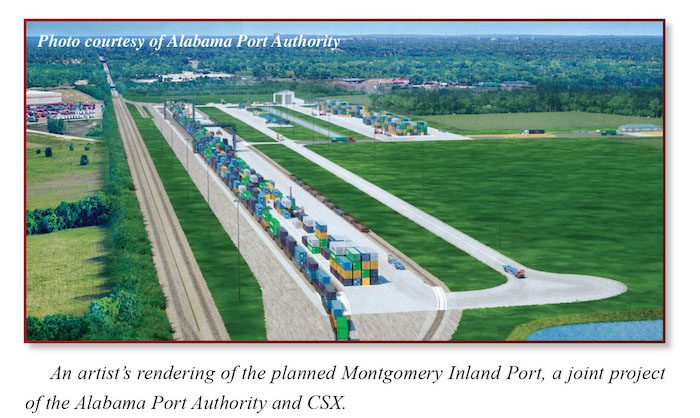
When fully operational in late 2026 or early 2027, the intermodal container transfer facility will provide direct rail and truck connections to the Port of Mobile.
The facility will be located along Mobile Highway, close to Interstate 85 and U.S. Highway 31, giving trucks easy access. When complete, it will handle up to 30,000 containers annually.
Inland Ports Support the Future of Freight and Distribution
As global trade, e-commerce, and supply chain complexity continue to grow, inland ports are becoming increasingly important to national logistics networks.
Once viewed primarily as relief valves for congested seaports, inland ports now serve as strategic freight gateways that support regional economic development, industrial site selection, export access, and more efficient goods movement.
By connecting coastal ports with inland markets through rail, highway, warehousing, transloading, and distribution infrastructure, inland ports are helping companies lower costs, improve reliability, and position operations closer to customers and suppliers.
About the Author
Michael D. White is a published author with four nonfiction books and more than 1,700 bylined articles on international transportation and trade to his credit.