
North, south, east, west and all points in between, state, regional and municipal economic development agencies are racing to cultivate shovel-ready sites as construction costs climb and the competition to attract business intensifies.
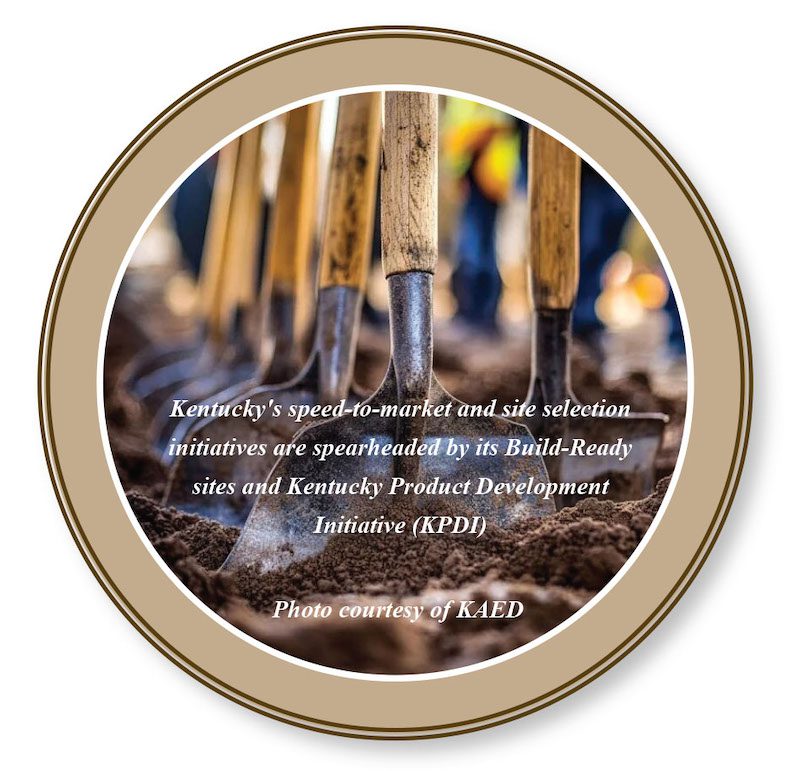
A prime illustration of the surge is Kentucky where its speed-to-market and site selection initiatives are spearheaded by its Build-Ready sites and Kentucky Product Development Initiative (KPDI), which are “paving the way for future speedy development and economic growth,” says Terri Bradshaw, Executive Director of the Kentucky Association for Economic Development (KAED).
The initiative is a collaboration between the Cabinet for Economic Development and the KAED. Through the KPDI, the state enables companies to quickly locate in Kentucky while mitigating the risks and delays normally associated with the construction process.
The results are impressive. Currently, the state is home to 28 available Build-Ready sites with several other locations currently working toward certification.
Kentucky, says Bradshaw, “is well positioned in this environment because it combines strategic location, strong infrastructure, and a growing commitment to site readiness at both the state and local levels.”
From a location standpoint, she says, the state “offers central access to a majority of the U.S. population within a day’s drive, robust multimodal logistics, and a strong manufacturing and industrial base. And many Kentucky communities already have industrial sites with utilities, transportation access, and zoning in place, which reduces risk and shortens project timelines for companies.”
At the state level, “Kentucky has made targeted investments to help communities move sites from ‘available’ to truly shovel-ready,” says Bradshaw. “Programs like the Kentucky Product Development Initiative provide critical upfront funding for due diligence, infrastructure, site preparation and spec buildings, allowing communities to compete earlier and more effectively in the site selection process.”
The KAED’s role “is to support and strengthen those efforts on the ground,” she adds. “We advocate for continued investment in site development, provide education and training so local practitioners understand evolving site readiness requirements, and work to align communities, utilities, and state partners around realistic, market-driven expectations. We also focus on ensuring that communities of all sizes ─ including rural areas—have access to the tools and capital needed to prepare sites.”
Ultimately, though, says Bradshaw, “Kentucky’s advantage lies in its ability to offer certainty. When a company evaluates a shovel-ready site here, they see not only a prepared location, but a coordinated network of local, regional, and state partners committed to moving projects forward efficiently and responsibly.”
Industries such as advanced manufacturing, automotive and aerospace supply chains, food and beverage processing, logistics, and energy-intensive operations, she says, “are particularly well suited to shovel-ready sites because they require substantial infrastructure, predictable permitting, and the ability to move quickly once a decision is made.”
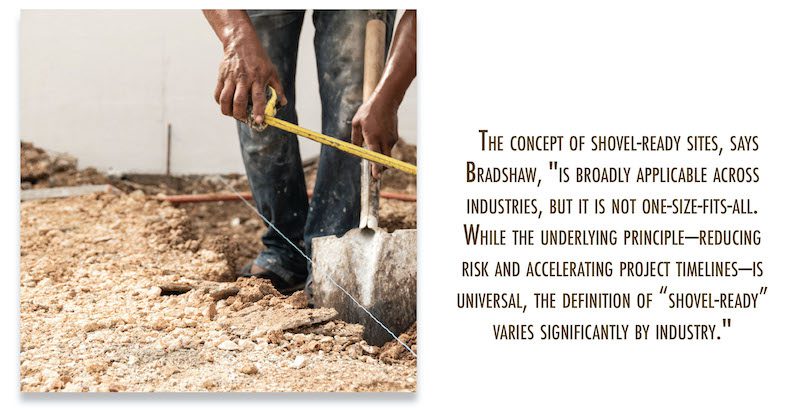
The concept of shovel-ready sites, says Bradshaw, “is broadly applicable across industries, but it is not one-size-fits-all. While the underlying principle—reducing risk and accelerating project timelines—is universal, the definition of “shovel-ready” varies significantly by industry.”
For those sectors, “having utilities, environmental work, zoning, and site control already in place can be the difference between winning or losing a project.”
Other industries, “especially those tied to research, technology, or specialized production, may require more customization or flexibility. In those cases, the value lies in a community’s ability to adapt quickly,” she says.
“Competition for investment has intensified nationwide, and shovel-ready sites are now a key differentiator,” says Bradshaw. “They are no longer a ‘nice to have.’ They are a baseline requirement for competing in today’s economic development environment.”
The roll of other government and business entities across the country releasing the parking brake on their “speed-to-market” efforts is growing day by day.
Among dozens of cases nationwide, the list currently includes…
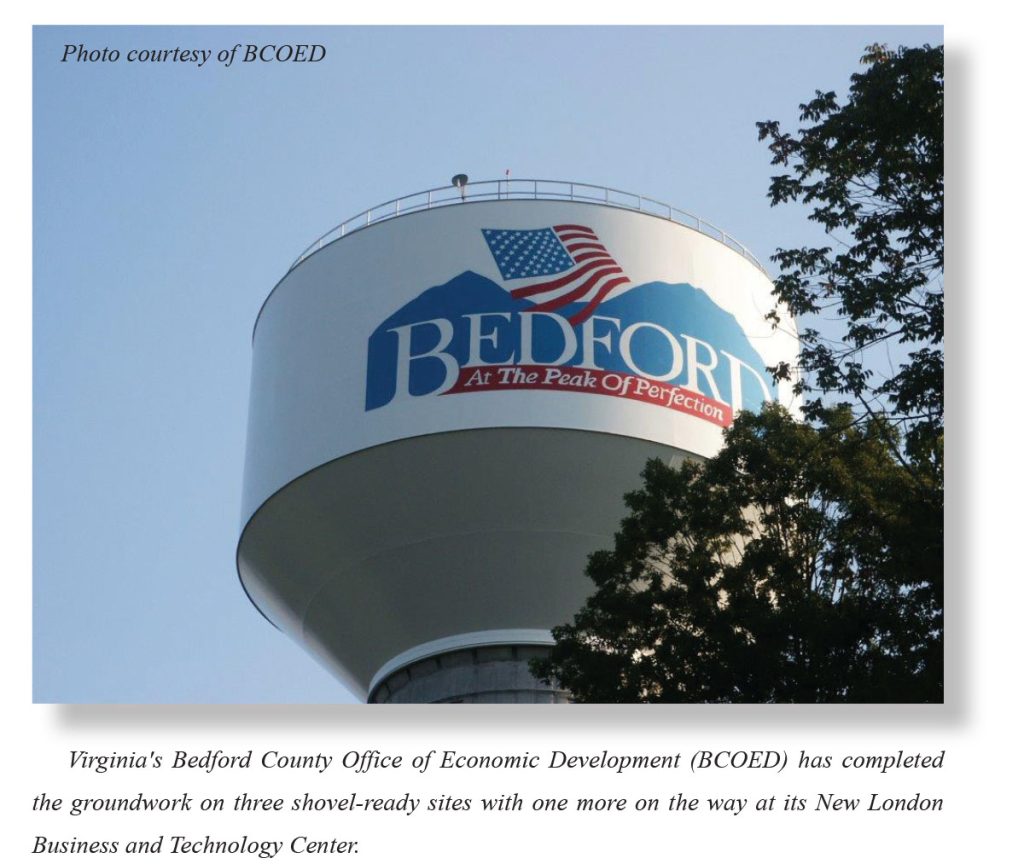
Virginia – The Bedford County Office of Economic Development (BCOED) has completed the groundwork on a pair of shovel-ready sites at the New London Business and Technology Center. Bedford has three pad-ready sites in New London with another one on the way. According to BCOED head Pam Armstrong, development of the two newest sites ─ Lots 10A and 12A ─ was made possible by a grant from the Virginia Tobacco Commission with matching funds provided by Bedford County. Lot 10A includes 1.95 acres of pad-ready space within a 10-acre parcel and can accommodate a 15,000-square-foot facility. Lot 12A is a 1.70 acre pad-ready space on a 7.52-acre site that is suitable for a 10,000-square-foot operation.
Pennsylvania – Pennsylvania is investing over $39 million through the PA SITES program to develop 11 shovel-ready industrial sites and boost economic competitiveness. The grant program has allocated $113.6 million to 29 projects, transforming underused properties into commercial and industrial hubs with improved infrastructure. By developing shovel-ready sites, Pennsylvania “aims to attract business investments, stimulate construction, and create long-term job opportunities across the state,” says the Office of the Governor.
Florida – The Orlando Economic Partnership’s (OEP) newly created Development Initiative for Regional Transformation (DIRT) is a region-wide initiative designed to expand the Orlando area’s pipeline of development-ready commercial and industrial sites, from early-stage parcels to fully shovel-ready properties. By evaluating, advancing, and marketing sites at every stage of readiness, the program “positions the region to compete for and attract high-impact business investments.”
New York – The Empire State is investing more than $43 million to prepare five upstate sites for new manufacturing and high-growth industries. The latest round of FAST NY grants will fund infrastructure upgrades in Albany, Erie, Fulton, Herkimer, and Orange counties, aiming to make large sites ready for employers looking to build quickly.
New Mexico – Two new bills have been signed into law that will expedite the creation of shovel-ready sites for businesses looking to relocate or expand in New Mexico. The Site Readiness Act (SB 169) and the Utility Pre-Deployment Act (SB170) are designed to work together in response to the need for designated economic development sites that are strategically located to become ready for businesses to move in quickly. SB169 establishes the Strategic Economic Development Site Advisory Committee, which will review applications from local communities and property owners for site certification. Power is a huge part of the infrastructure puzzle, so SB170 focuses on speeding up the regulatory review process for utilities approval to allow for earlier investments in infrastructure on these high-potential sites.
Colorado – Prowers [County] Economic Prosperity (PEP) recently unveiled its new Shovel Ready Program – “a strategic initiative aimed at unlocking development-ready land across Prowers County and positioning the region as a top-tier destination for business.” The new land-readiness initiative designed to identify and prepare key properties across Lamar and Prowers County for commercial development. “Each site is evaluated and prioritized based on infrastructure access, visibility, environmental compliance, and alignment with local economic objectives,” says PEP Executive Director. Tallie Harmon, who adds that sites “will be categorized by location, zoning, and strategic potential, then matched with developers and business owners based on need.”
Arkansas – The Little Rock Regional Chamber and Entergy Arkansas has completed the Select Site certification for a new 875-acre industrial ̔megasite’ located on the southeastern portion of the Little Rock Port. Select Site is an initiative designed to provide Entergy Arkansas-served communities with a competitive advantage and shovel-ready sites. “We are prioritizing the development of shovel-ready sites to attract top-tier companies to our state,” said Clint O’Neal, executive director of the Arkansas Economic Development Commission. “The Little Rock Port Megasite will be a significant asset for the State of Arkansas as we pursue economic development prospects, and Entergy’s ‘Select Site’ certification positions it as a location that meets the qualifications that site selectors and companies look for in an industrial site.”
Iowa – A nearly 300-acre industrial site on Des Moines’ southeast side has officially been designated as shovel-ready through the Iowa Economic Development Authority’s (IEDA) Certified Sites program. According to the city, the SE Des Moines Industrial Park “offers quick access to major transportation corridors” and “provides business prospects a streamlined path to development with reduced risk and faster timelines. Utility infrastructure design and costs have been outlined, and due diligence — such as archaeological and environmental assessments, as well as mitigation planning — has been completed.”
Ohio – The City of Cleveland is putting its shoulder into a project that would convert a long-abandoned manufacturing plant into a shovel-ready site to attract industry to its downtown sector. According to city sources, a partnership between the city of Cleveland and nonprofits the Cuyahoga Land Bank and the Site Readiness For Good Jobs Fund is advancing on a plan for the city to clean-up the site and do the preliminary work on making it attractive to potential industrial developers. Commenting at a recent press conference, Cleveland Mayor Justin Bibb said that “The best way to attract new companies and jobs is to have sites that are “shovel-ready.”
Georgia – The Georgia Department of Economic Development (GDED), in cooperation with Wayne County Industrial Development Authority (Wayne County IDA), has announced that the 312-acre Wayne Commerce Center has earned a “Georgia Ready for Accelerated Development” (GRAD) certification with “Select” status. To qualify for GRAD status, available sites must meet the program’s due diligence standards, be reviewed by a third party, and earn the final approval of a board of advisors comprised of public and private sector economic development professionals. The “GRAD Select” status is an indication that a site has met or exceeded more rigorous certification requirements. The GRAD Program offers more than 70 industrial certified sites that are ready for fast-track industrial projects.
Wisconsin – The La Crosse Area Development Corporation (LADCO) recently cut the ribbon at two shovel-ready sites in the City of Holmen. The sites certified by the Wisconsin Economic Development Corporation after they passed detailed checks on environmental safety, soil conditions, utilities, zoning laws, and property ownership.
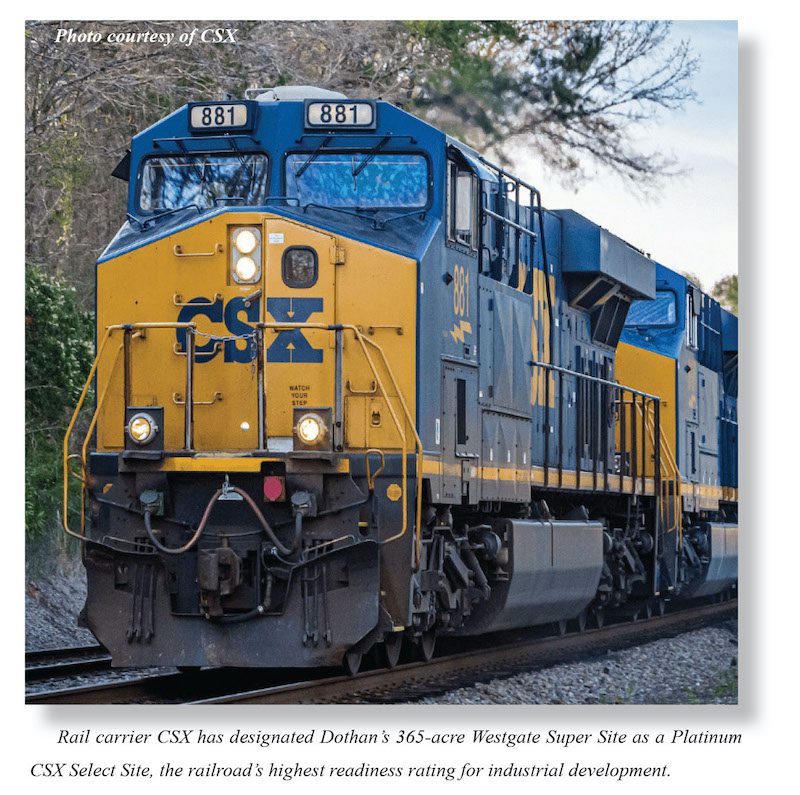
Alabama – Rail carrier CSX has designated Dothan’s 365-acre Westgate Super Site as a Platinum CSX Select Site, the railroad’s highest readiness rating for industrial development. According to CSX, Select Sites “are large, rail-served properties that have already cleared key hurdles such as environmental reviews, zoning and air permits, utility capacity, transportation access, and other due-diligence work, allowing manufacturers to move faster from site selection to shovels in the ground.” The Westgate Super Site was partially funded through the states Site Evaluation and Economic Development Strategy (SEEDS) program, which was created in 2023 to assist in the development of shovel-ready manufacturing and logistics projects across the state.
Tennessee – The state’s Department of Economic and Community Development has named 11 new Site Development Grant recipients. The Site Development Grant program is part of the Rural Economic Opportunity Act, which provides funding to improve the economies of Tennessee’s rural communities. Since 2016, TNECD has awarded 191 Site Development Grants across the state, totaling nearly $100 million in assistance to local communities. “A shovel-ready industrial site can be the deciding factor for a company looking to do business in Tennessee, and that’s why our efforts are critical to community and economic development,” said Gov. Bill Lee.