
The economy is uneven, with the added pressure from inflation and various political winds. Changes to federal laws and tariffs are altering the automotive track. And the march of technology is progressing in full force.
It’s a varied landscape in today’s automotive industry, and it was summarized as follows by Alexandra Segers, general manager of Atlanta-based Tochi Advisors.
“The overall auto industry is experiencing a mix of challenges,” but exhibiting “resilience,” said Segers. “Challenges include the adoption of battery electric vehicles and hybrid electric vehicles. These new technologies will influence the growth of the market in the coming years.”
Almost 15M
Noting that light vehicle sales reached approximately 14.94 million in the U.S. in January 2026, according to Statista, Segers said the global automotive industry is addressing “the effects of high raw material prices and increased inflation rates. A major geography shift is going on, as China is now accounting for more than half of the global car sales.”
Light vehicle sales in 2025 totaled 34.4 million units, up to 10.4 percent from 9.4 percent year-over-year, according to the China Association of Automobile Manufacturers, at 91.7 million units worldwide.
Besides the strong competition from Chinese automakers, “tariffs, the renegotiation of the United States-Mexico-Canada Agreement, semiconductor chip shortages and supply chain interruptions are other ongoing challenges,” Segers said, adding, “Vehicles are getting more and more software-dependent and traditional original equipment manufacturers have to adapt to compete with Chinese and tech-oriented OEMs.”

As for the geographic manufacturing hotspots around the U.S., Segers said those that are especially strong include the Great Lakes region, notably Michigan, with more than 950 auto-related manufacturing plants, and major OEM plants like GM and Stellantis; and Ohio, with Ford, GM and Honda plants.
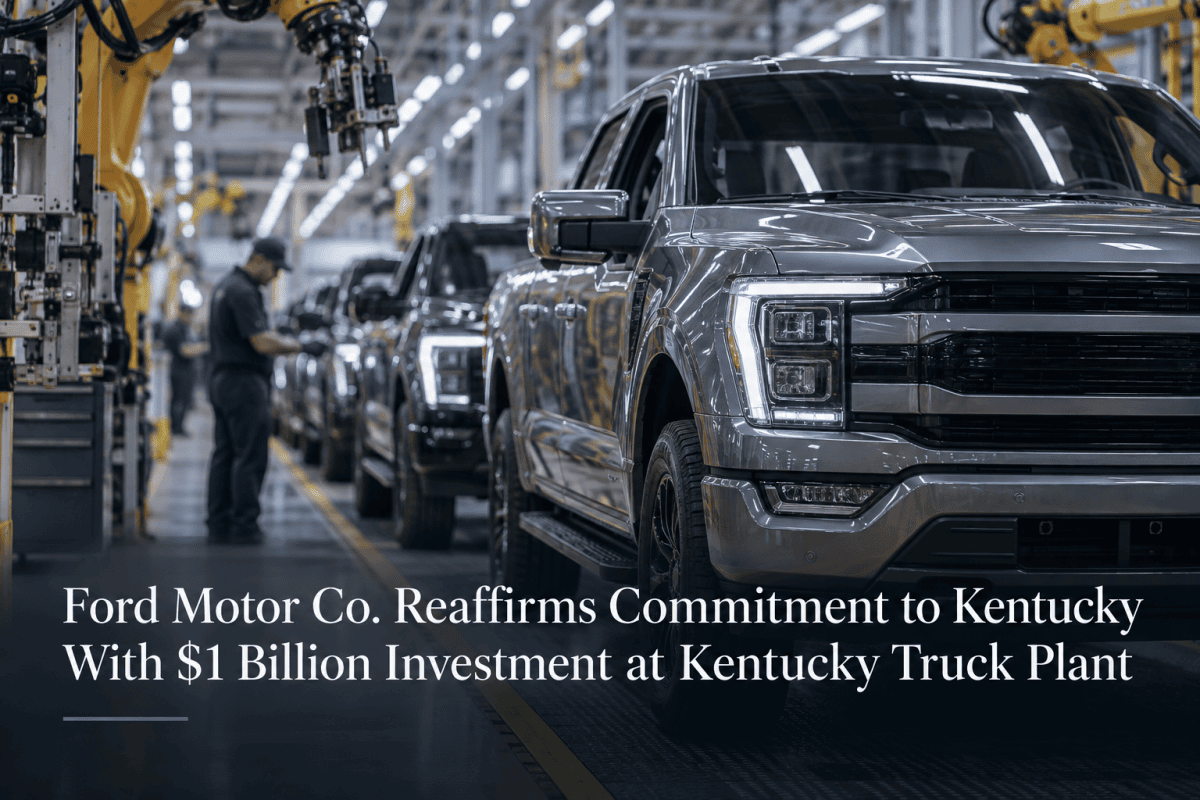
Another hotspot is the Southeast. Alabama hosts Mercedes, Honda, Mazda, Toyota and Hyundai; Georgia is home to KIA, Hyundai and Rivian; then come South Carolina with BMW, Volvo, Mercedes and Scout; Tennessee, with Nissan, Volkswagen, GM and Ford’s Blue Oval City; and Kentucky, with Ford and Toyota.
All told, the United States, Canada and Mexico are the leading automotive hubs for plants and their supply bases, “due to the existing United States-Mexico-Canada Agreement trade agreement and the large consumer bases,” Segers said. “The renegotiation of the USMCA in July 2026, could mean major supply chain disruptions if the trade agreement with Canada and Mexico would not be extended.”
Europe has major auto hubs in Germany, Czech Republic, Spain, Slovakia and Austria, supported by highly-skilled labor and very well-developed infrastructure; in Asia, South Korea and Japan were the leading auto markets, but have been outrun by China, with its highly tech-oriented assembly.
It’s Electrifying
As for EV sales, in 2024, 22 percent of new cars sold globally were electric vehicles. In the United States, EV sales accounted for 10.5 percent of all new car sales in the third quarter of 2025, according to Our World in Data. “This indicates a significant presence of EVs in the overall automotive market,” said Segers, “with China accounting for almost two-thirds of global EV sales in 2024.”
Concerning rising costs spurred by an overall dearth of electricity, she said that spike “will probably hurt the EV market, as overall costs for EV owners increase. For example, if the cost for charging a 40kWh battery pack at home would be $0.16 per kWh, therefore $6.40, that increase to $0.20 would lead to $8.00 for a charge. And public charging stations are normally more expensive and would also see an increase in cost.”

However, EVs still offer significant savings for the user in maintenance compared to cars with combustion engines, therefore the recent rising electricity rates might not influence the growth of the EV market.
However, tariffs well could.
“As the automotive supply chain is highly international, tariffs lead to higher prices if vehicles and/or parts are imported to the U.S. companies have to deal with higher financial burdens,” said Segers, “which reduces investment. The introduction of increased tariffs in regard to vehicles, auto parts, steel and aluminum has a major effect on the industry, leading OEMs to reorganize their supply chains.”
That issue has some OEMs and suppliers considering reshoring production in the U.S. to avoid tariffs, “but higher U.S. labor costs require heavy use of automation to offset” that expense, she said, “meaning much higher upfront investment in buildings and equipment.”
Used EVs
From his perspective, John Eichberger, executive director of the Alexandria, Va.-based Transportation Energy Institute, said much of the news “during the past 12 months has been about the retreat from EVs and hybrids,” as there was a drop when the tax credit expired on Sept. 30, 2025 “after a big ramp up in the two previous months. Then came the expected big drop in October.”
However, Eichberger also pointed out that what’s gone down has come back up. “It’s rising again,” he said. “Will we get back to 2025 figures? I don’t know, but that’s typically what happens. I think the market will continue to improve and reach stability.”
Going forward, he believes that the automobile manufacturing industry “is taking a customer-first approach, as opposed to one focused on compliance, which could be more successful.” Part of the reason the EV industry will begin to rise “is that several million EV leases are up and the cars will come on the used market” with a price range of “$25,000-to-$35,000.”
Previously, it was the affluent buyers who could afford EVs, “but many people could not,” said Eichberger. “This large addition to the market will move the needle toward lower income levels, which is good. However, they may not be able to charge the cars at home, so that increases the need for public chargers.”
Fortunately, that number has risen of late. The charge port count went up 52 percent nationally 2025 from 2024, from about 50,000 DC fast charging (or DCFC) ports to nearly 77,000; the number of sessions per month were about the same last year at around 215 sessions per port, according to EverCharge, “which means infrastructure is being used, so that means good availability and some demand for more chargers,” he said.
The cost of using chargers varies greatly due to utility company tariffs, the network they’re on and whether the user is paying with an app or a credit card. Eichberger said the TEI will have updated figures coming out in the spring.
On the combustion side, manufacturers “are saying they will continue to build more combustion engine automobiles, but we will see more hybrids, too,” he said, “which now represent more than 12% of sales, according to Omdia.com. “That’s because certain models that come in hybrids, such as the Toyota Camry, are getting 50 miles per gallon and self-charge through regenerative braking, requiring the driver to do nothing different.

“I would not be surprised to see hybrid sales hit 20 percent in the next few years based upon the growth we have seen in recent years and production plans,” Eichberger said. “We have seen growth and sales.”
In terms of the effect of the federal tariffs, the average new vehicle is about $50,000 now, but only about $1,500 is due to tariffs. So he turned his focus to the overall price, which is an issue for manufacturers trying to connect with the mass market.
Eichberger pointed out that, according to Edmunds, about 20 percent of loans in the fourth quarter of last year required monthly payments of more than $1,000. “The cost has to come down if automakers want to sell 16 million units a year, because the public can’t afford to pay more money for the cars.”
Speaking of new administration rules, he said they’re “slowing down the rate of required efficiency improvement, which had called for a higher miles per gallon improvement every year. But, this could be offset by a regulatory change. Crossover vehicles have been classified as light trucks and held to an easier standard, but under the new proposal they will now be considered cars, which have higher standards.”
With the MPG target lower under the current administration, “crossover compliance will take the OEMs a few years to figure out. Therefore,” said Eichberger, “manufacturers have to [learn] how to do this,” he said. “A new proposal came out in December, which could eventually lead to more hybrids on the market.”
Free Range?
While reviewing the manufacturing landscape, Ford Graham, senior vice president of infrastructure and economic development for Richmond, Va.-based McGuireWoods, echoed Segers’ observations. “The rust belt around the Great Lakes states is still strong, as well as the South, notably South Carolina and Georgia, for cars in general.”
Graham said the combustion market is still strong in the U.S., with the highest percentage of more than 77 percent of sales, according to JDPower Autovista24, “even with the tariffs and related surcharges increasing the prices.”
Still, the tariffs are throwing a wrench into various scenarios. “We represent an original equipment manufacturer that was interested in building its first production facility in the U.S.,” he said, “but their decision-making timeline keeps getting extended due to tariff concerns.”
Graham wasn’t upbeat about the EV/hybrid sector. “It’s not doing that well,” he said. “There are two major issues that are putting dampers on the industry. One is that the industry went all-in to develop different platforms to embrace the full EV model. That’s fairly successful in Europe, but not so much here in the U.S. In the simplest sense, it’s more expansive geographically and it just takes longer to get from town A to town B.”
“Plus, there is still a lack of charging stations,” Graham said, “which makes distance a problem.”
“A great deal of money has been spent by many smart people on EV and hybrid production,” he said, “but it’s just been slower to be adopted in the U.S. High interest rates are not helping and with the sales not coming in, so there are cash flow issues. Those [manufacturers] who are doing O.K. are those who didn’t jump in head first, like BMW.”
The other big factor is the U.S. federal tariffs and “their unstable nature. If they were set in stone, then those companies and their supplier networks could plan. Now, no one knows if they’re making the right moves all along the supply chain. For instance, if you put tariffs on an engine coming in from Germany, that can make the car 20-30 percent more expensive.”
All of the above factors have made the industry’s projected growth less reliable. “There have been some announcements of projects that have been started and abandoned,” Graham said, “or what they are manufacturing is not being purchased.”

Political tensions between the U.S. and Canada and/or Mexico are compounding the issues.
“Because of our long-standing, three-country interconnectivity, unfinished products often cross the borders several times, with tariffs applied on each occasion,” said Graham. “The ever-changing nature of the administration’s tariff policy has been really problematic, across all manufacturing and all established supply chains.”
So today, the main news remains that “traditional combustion engines are being sold, people are still buying them,” he said, “and the hybrid models are proving the most popular new type of EV technology in the U.S.”
On that note, Graham cited the approach of Scout Motors at its plant in South Carolina. “It was going to be all EVs when it announced two years ago,” he said. “Now, it has added a generator to the car that will provide additional power via gasoline. Consumers don’t want range anxiety. It continues to be a real issue for the industry.”
The Chinese automakers continue to develop EVs “and they’re making significant progress,” said Graham, “in design and sales.”
“They’re committed to being the world leaders in the industry and have some of the most popular EVs in the world. China-based BYD, for example,” he said, “has more than two times the worldwide market share of sales as the American EV giant, Tesla.”
“And they are being sold everywhere,” said Graham, “except for the U.S.”
Battery Evolution
As for BYD, the big news is that the car manufacturer from China introduced its new Blade Battery 2.0 last March. The new EV battery boasts a pure electric range of more than 1,000 km (621 miles) under China Light-Duty Vehicle Test Cycle conditions and even charges in an expedient manner.
While BYD has no U.S. presence―due to tariffs―the company is well entrenched elsewhere around the globe.
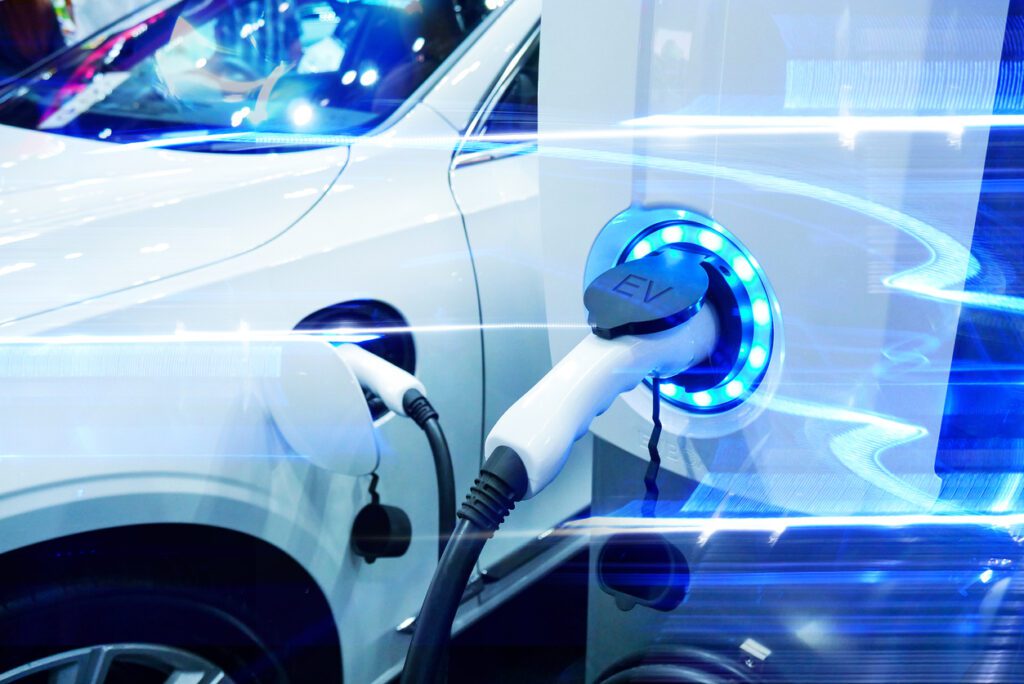
“I don’t know of any car that gets more than 600 miles from a fill-up, or a charge, that both take about 10 minutes,” said Nima Farshchi, director of the Center for Social Value Creation at the Robert H. Smith School of Business at the University of Maryland, College Park. “This is happening with improved cable usage, which allows all EVs (and not just Teslas) to use them.”
That’s been a concern, but Farshchi also pointed out that, “The market has been responsive to this issue. For instance, the superchargers at malls and convenience stores that have been exclusively for Teslas are now being designed to be utilized by nearly all EVs by the end of 2026,” as long as the user has the Tesla app and either a Magic Dock adaptor or a North American Charging Standard-compatible adapter.
“It was stated that this would happen by the end of 2025 and for the most part, barring a few one-offs,” he said, “it has.”
But Farshchi also addressed the EV sales situation. “Sales are still growing in the states, but not at the previous rate due to the lack of tax benefits and grant accessibility,” he said, noting a four percent decrease in sales in the U.S. from 2024 to 2025, according to Bloomberg.
He also discussed how it’s a different story elsewhere in the world. Last year, sales in China increased 30 percent and 17 percent in Europe, according to BNEF and Cox Automotive.
As for hybrids, S&P Global said that 17 percent of new car sales in the U.S. this year will be hybrids, so there is considerable growth in that part of the market.
“While hybrids are making greater inroads than EVs, Ethiopia has gone so far as to ban the import of combustion engine cars,” said Farshchi, “globally it’s still the U.S. that is underperforming and dragging the market down.”
That’s produced results in Ethiopia, v aadw for between the second quarter of 2020 and the second quarter of 2025, the share of new vehicle registrations for hybrids jumped from 3.1 percent to 16.3 percent. In that same time, the share of EVs increased at a much slower pace, from 1.4 percent to 8.6 percent,” also according to Bloomberg.
With artificial intelligence becoming more prominent everywhere, “its impact,” said Farshchi, “will be interesting to follow. Whether it’s being used with autonomous vehicles, hybrids, EVs or gas guzzlers, all cars are more becoming more reliant on AI, as they are basically rolling computers at this point.
That said, there is still that first big domestic hurdle to overcome. “There are still not enough charging stations in the U.S.,” he said, and despite the progress, “It still takes hours to charge a car.”